As trainers we see clients that come from a variety of different movement backgrounds. Some clients are more aware of how their bodies move and others aren’t. One of the things that new trainers often struggle with is cueing movements for clients who are struggling. This certainly comes with experience and seeing more and more clients but today I wanted to share a couple of my favourite ways to cue clients who may be struggling with some movements.
Verbal Cueing
Verbal cueing is easily one of the most commonly used forms of cueing and for many clients it can be incredibly effective. Verbal cueing has so many options and every trainer will need to figure out what their favourite verbal cues are to use for different exercises. Verbally cueing works well with clients who are aware of their bodies and how they are moving in space. Verbally cueing spine positions, head positions and key points for exercises can be one of the simplest ways to cue clients…but what happens if verbal cueing isn’t working for a client?

Tactile Cueing
For clients who have less body awareness tactile cueing can be helpful when it comes to ensuring they know how their body is moving in space. Always make sure that before you touch any client you ask permission to put your hands on them. I always like to tell them what I’m going to be doing as well. For example, to help cue a shoulder blade squeeze in a row variation I would say to a client “I’m going to put my fingers between your shoulder blade and I want you to try to pinch them with your shoulder blades.” For some clients when you help them move into the positions you want them in it allows them to truly feel what that movement should feel like. Typically with tactile cueing you will use it more heavily in the early days with a client and as they get more comfortable with the movements and they become more confident in the movements the tactile cueing won’t be used as frequently.
Equipment Cueing
Using different equipment can also be a very useful way to help clients who need some visual cues. Things like using a box positioned behind a client for a box squat or a band around a clients knees to keep their knees from caving in during a squat can be really simple ways that can help clients grasp the movements and how they should feel. Obviously each trainer will have access to different types of equipment so you may need to get creative with what you have but there using equipment to put clients into optimal positions is a really great cueing opportunity. This is also a place where weight machines can be beneficial for clients who are really struggling with form as they put clients in the correct positioning. Using machines for a couple of sessions with clients may allow them to feel the position the body is supposed to be in and help them become familiar with body positioning before moving onto more free weight style exercises.
Rephrasing
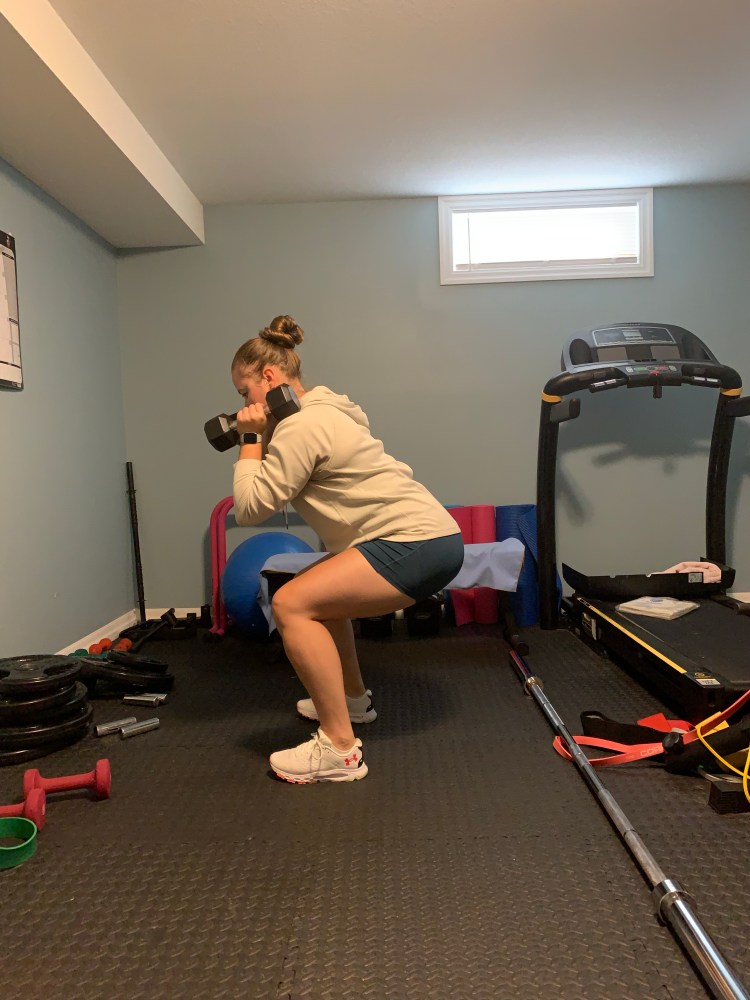
When in doubt, rephrase your cues. When working with new trainers, I always say that you need to have 3 different ways to cue the same movement. There are certain cues that will resonate with clients and certain cues that won’t and it’s important to be able to rephrase cues to help get your client to the correct movement. Get creative with how you are cueing and if you are struggling building relationships with other trainers. Odds are they will have the same way to say things that you’ve never thought of. Having ally’s in the industry is super important to help make you a better trainer so learn from others.
Each and every client will be different in one way or another and it’s important when teaching exercises to be able to cue clients to get them to the correct movement. This is something that definitely takes practice and you will need to work with a lot of different clients to be able to build and refine this skill. Try different things and note what resonates with the most clients. Those things are likely to be useful in the future!
 ashleepedlowcoaching.ca