I am a constant advocate for teaching clients how to spot quality fitness professionals. For those of us who hold post-secondary education and gold standard credentials the industry can be an incredibly frustrating thing so today I want to share one more way that can help you separate the quality fitness professionals from those that aren’t.
If you are working with a trainer and they aren’t focusing on these areas in addition to the physical part of your health and fitness journey then it may be worth taking a step back and questioning them a little further. As much as most of us realize that we need to be exercising regularly, exercise will only get you so far (especially if you are completely neglecting some or all of these other areas).
Nutrition
I don’t think that this one is going to surprise most people and I would say that most trainers focus on this, however I think there are a lot of trainers that focus on it in the wrong way (but that could be a whole separate post). Obviously eating healthy is going to help you improve your overall health and wellness…I don’t really think that we need to debate that, however I think that looking for trainers who teach you about healthy nutrition behaviours and how to implement these into your life far outweighs the ones who tell you to “eat this” or “not eat that”.

A quality trainer will be able to recognize that there are certain things that will fit into your lifestyle and certain things that don’t and their goal should be to help guide you on how to do those things. I say this a lot but personal trainers ARE NOT dieticians. If a personal trainer is prescribing you a meal plan with specific foods and measurements of those foods I would be looking into what qualifies them to do so. Typically this is something that dieticians are trained to do, not personal trainers so be cautious of strict meal plans coming from personal trainers.
Sleep
When it comes to health and wellness I often think of it as a triangle. Each point of the triangle is one of the three most important components of health and wellness. One is exercise or movement, one is nutrition and the third is sleep.
In the past sleep deprivation has been something that people wore like a badge of honour however I do think that this is starting to change some. Your body recovers and prepares for the next day with sleep. Your muscles need it if you are training but your mind also needs it in order to stay at the top of your game. In fact, the CDC states that being awake for 24 hours straight is equivalent to having a blood alcohol content of 0.10%, so yes sleep is that important.
A trainer who isn’t teaching you about the importance of sleep or one that at least mentions it is one that I may be questioning. Sleep is something that I will bring up with most clients. Some sleep great and don’t really need any tips or tricks around that, but when you find that clients are not sleeping there may be other concerns that arise. Your body can’t rejuvenate if you’re not getting sleep, and trainers should be educating you on this.
Stress
Stress…we all have it and it is something that your trainer should absolutely consider when it comes to health and wellness. The human body can handle some amounts of stress. This amount varies from one person to the next and there isn’t anything wrong with that, but what it does mean is that a program that is designed for an elite athlete may be too much stress for a weekend warrior.

It’s important to remember that exercise is a type of stress for the body and although we can handle stress to a certain point too much stress will make the body vulnerable to injuries or illness. Which is why it should be something that your trainer is talking to you about and checking in on regularly.
Your stress may change from one week to another. You may have times during the year where you are more busy and therefore you experience more stress. This could be reflected in your training program with a slight decrease in the amount of exercise you are doing during that time for example.
It’s also important for trainers to be aware of how their client handles stress. Every single person has a different stress tolerance and for some people adding exercise to an already full plate can be more unhelpful than helpful. In these situations, you want your trainer to work with you to provide you with stress relieving techniques and help you alleviate stress from areas of your life before implementing new stresses in the way of exercise. If you’re trainers are not monitoring your stress levels regularly, it’s worth opening a conversation about it with them in order to ensure that your fitness program is helping and not hindering your progress.
Mindset
Trainers should be at least trying to understand your mindset. This may not be something that they directly talk to you about, however it should be reflected in how they are coaching you.
If you find yourself working with a trainer who is telling you exactly what they want you to do and it’s not working for you, then maybe your trainer hasn’t spent enough time trying to understand your mindset.
As trainers we need to understand that some clients will come to us because they want to change their lives. Others will come to us because they are being told by a healthcare practitioner or a family member that they need to exercise more or lose weight or whatever the reason may be.
Although at the end of the day a client is there to exercise, the reason that they are there does matter. Imagine telling a client who wants all the help to achieve their goals exactly what you want them to do. They are probably going to do it, just as you’ve told them to with little question and that’s great.
Now imagine a client who has been told by someone else in their life that they need to exercise. If you take the same approach and tell them exactly what to do to achieve that goal…it’s not likely to be met with a positive response. In fact people who do not want to do something typically resist even more when they are told to do that something.
Mindset will play a huge role in your success on your health and wellness journey. It’s important that your trainer is trying to support you in whatever mindset you are currently in. Typically we don’t continue to do things we don’t enjoy or don’t want to do, which is why your trainer should be considering your mindset.
Your Schedule
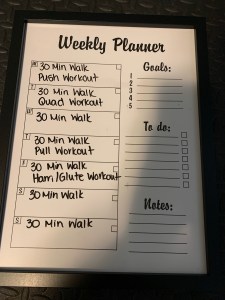
If you’ve ever met with a trainer who has coached you or written a program for you consider if they have asked you in detail about your schedule? I’m not talking about them asking you how many times you want to train a week because most of them will probably ask you that. But did they ask you about the other activities in your life. What your work schedule is like, does it change from week to week? Do you have other commitments with running kids places or volunteering or any other activities you may enjoy? Do these activities happen every week, every month? What time of day do these activities happen? And so on. I know when I work with a client who is either just starting out or getting back into a consistent fitness routine, it typically is beneficial to map out with the client exactly when they will be completing their training sessions. And I mean, day of the week and time of the day. Will this change, absolutely, however by mapping this out you with you, you are able to see exactly when you should be doing your workouts and you can also find the pickets of time you may have to make up for some workouts if you are unable to use your regularly scheduled time. Many trainers may just take the approach of telling you how many days a week you should train, but if they aren’t considering your schedule they are probably setting you up for failure. I would argue that this is probably the most important thing for a trainer to consider when developing a plan with a client.
So if you’ve ever worked with a trainer, do they look at these different areas of your life. Maybe they looked at some of them, but not all? Or maybe they did look at all of them? A quality fitness professional should be looking at all these areas in addition to your fitness, or at least checking in on them. Keep your eyes peeled for those quality fitness professionals!
 ashleepedlowcoaching.ca