Diastasis Recti has been portrayed often as a “bad thing” during pregnancy and the postpartum period. It’s presented as something that needs to be avoided…
But…here’s the thing. During pregnancy your belly is going to grow as baby grows, that is a fact. Because your belly needs to grow the tissues of the belly are going to stretch and typically they will stretch at the weakest points. Cue the linea alba.
Let me back up for a minute…just in case you are new here and aren’t 100% sure what we are talking about. The linea alba is where your 6 pack muscles connect (6 pack muscles may not be an anatomically correct term, but it let’s you know exactly what I’m talking about). During pregnancy, as the belly grows this connection point starts to stretch out. There is no way to avoid this…it is a normal response to a growing belly and baby. Yes that’s right, NORMAL! Just because this is going to happen doesn’t mean that we don’t want to be aware of it or manage it.
In order to improve a Diastasis we want to focus on improving core function. Improving strength and pressure management within the core can help manage and improve a Diastasis over time. Assessing a Diastasis when done by the same person can give you a good indication over time of how it’s improving. To assess a Diastasis start by having the client lie down on their back with their knees bent

- Start by looking at the belly area and having the client take a few deep breaths, look for the quality of skin and tissue, loose and excess skin may indication some insight into the tissue quality underneath the skin
- Beginning at your sternum use 2-3 fingers to gentle press into the linea alba (midline of your stomach) and working down to be a couple inches under the belly button
- As you work your way down notice how deeply you are able to push down into your abdomen and how supportive the tissue feels (do you feel resistance or springing back when you push down)?
- Now lift your head just off the floor and feel the linea alba again. DO you feel the two sides of the rectus abdominis come together and hug your fingertips? If not notice how many finger spaces are present.
- You want to complete this process above the belly button, at the belly button and just below the belly button.
It’s important to remember that if you do present with a Diastasis it does not mean that you can’t exercise. It’s important to focus on pressure management and work with a pelvic floor physiotherapist to help to improve the Diastasis and get back to functioning normally.
Below you will find some exercises that may be helpful on your journey to healing your Diastasis. Remember that seeing a pelvic floor physiotherapist is also key in this situation.
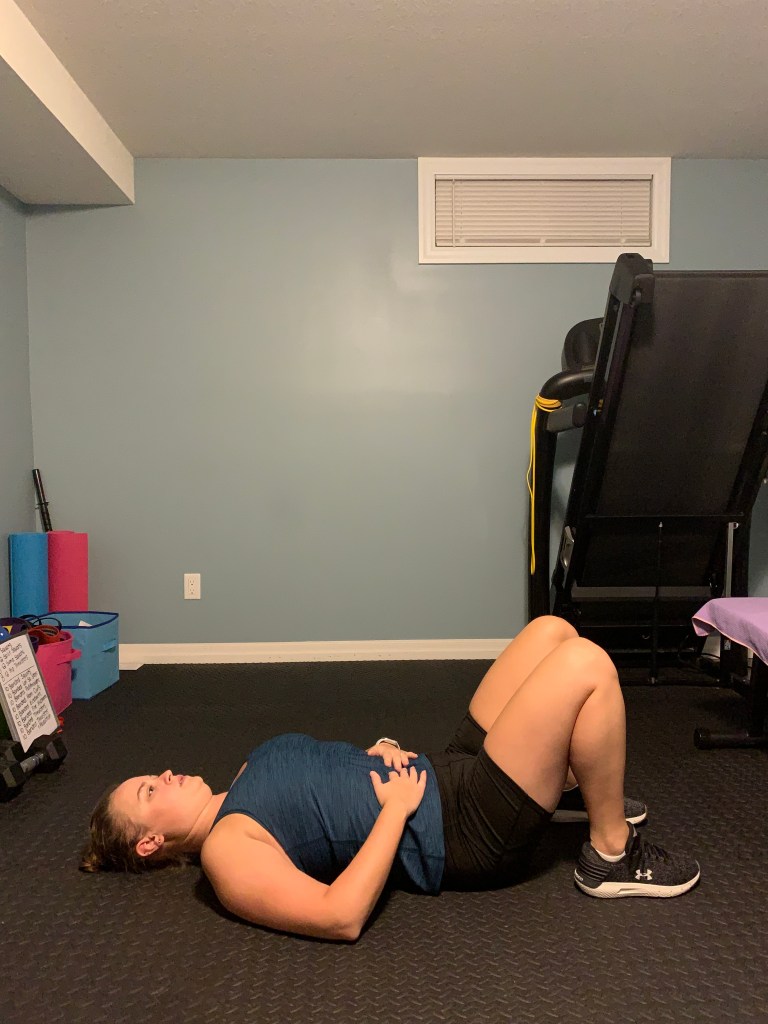
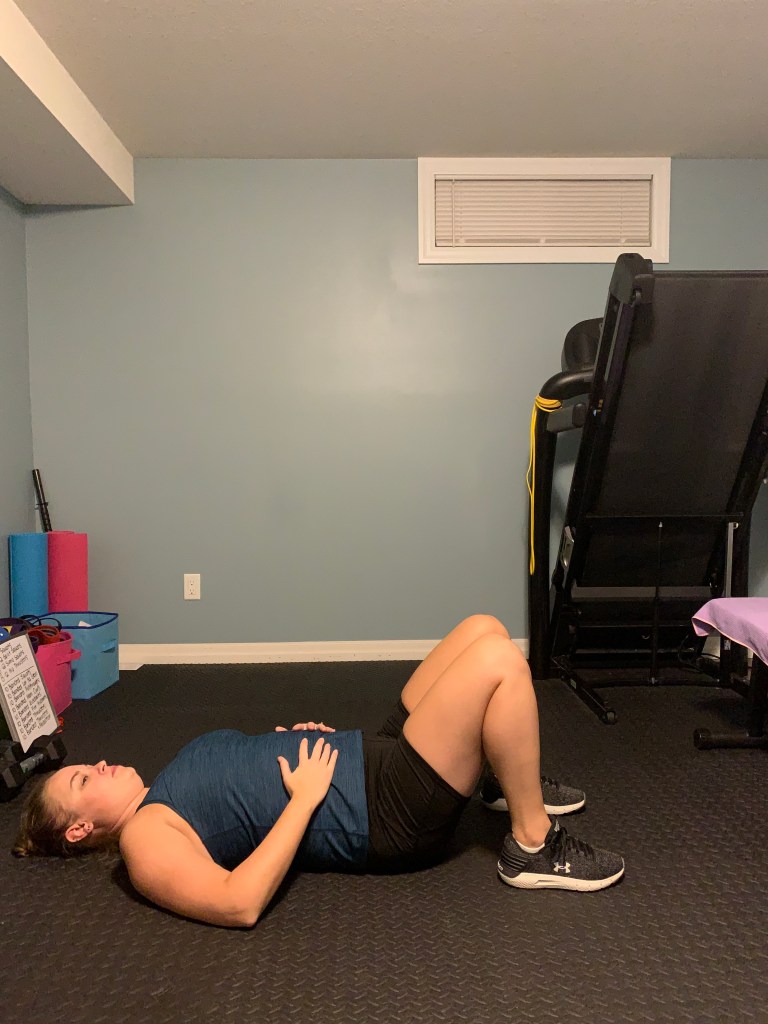
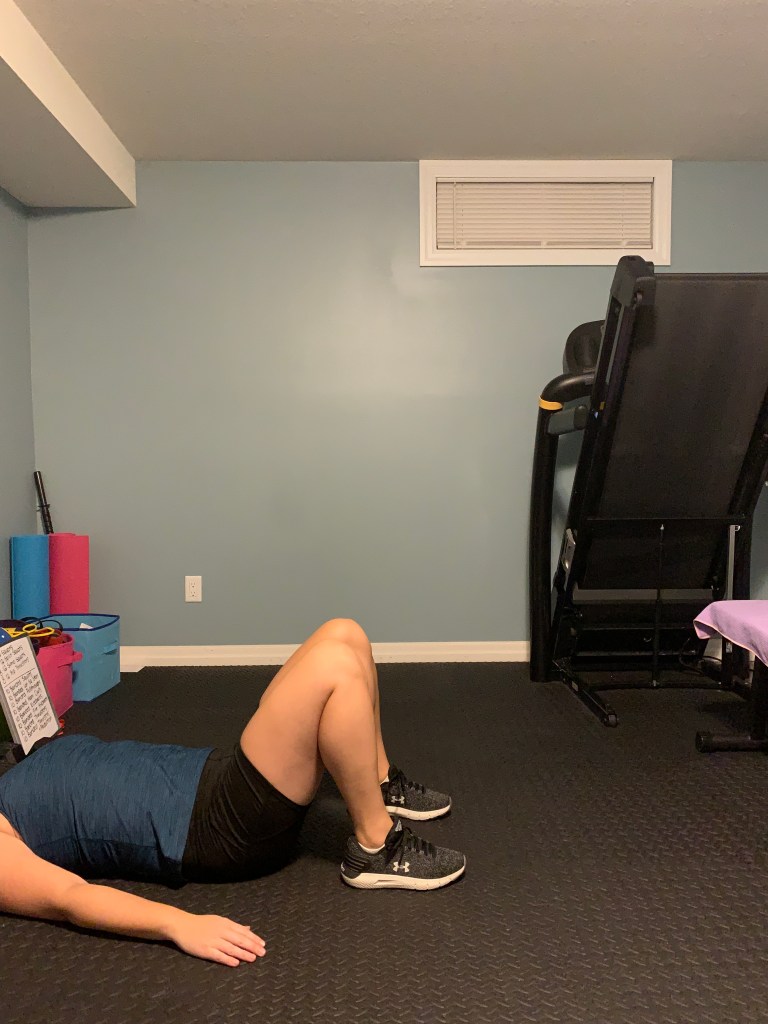
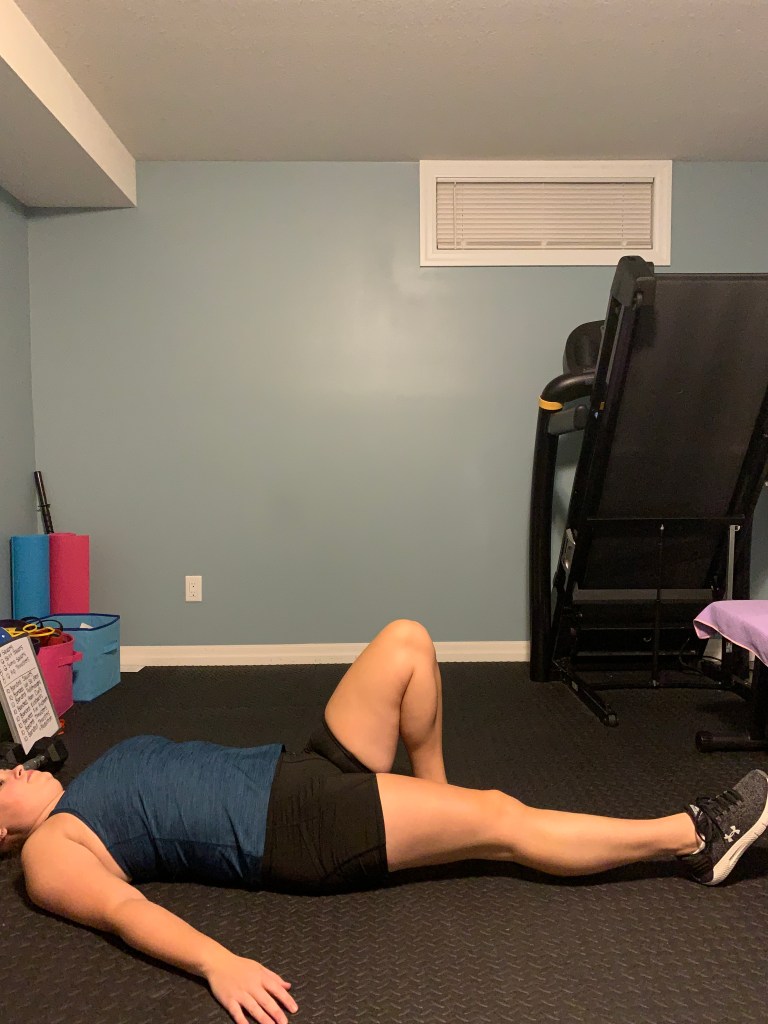

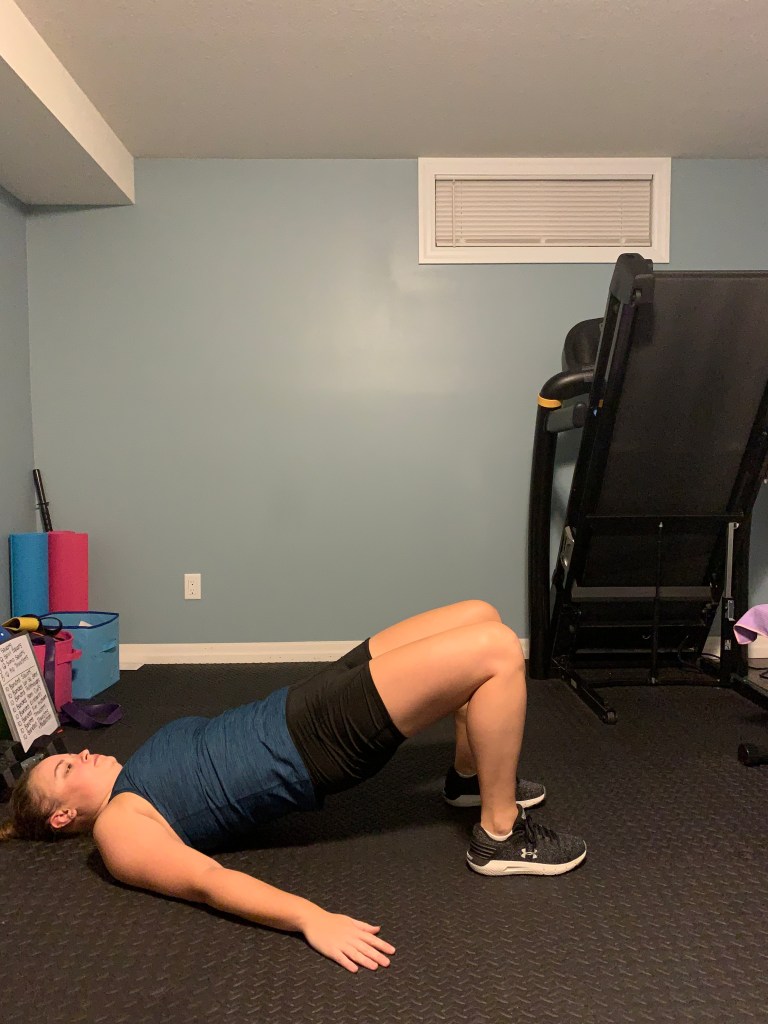
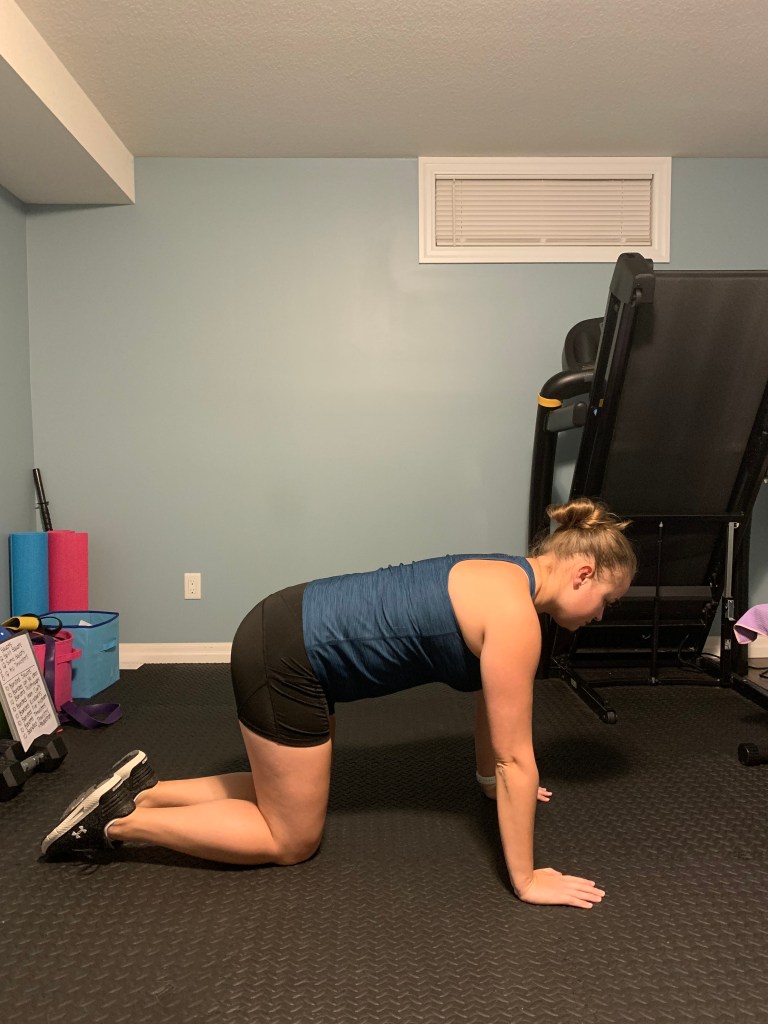
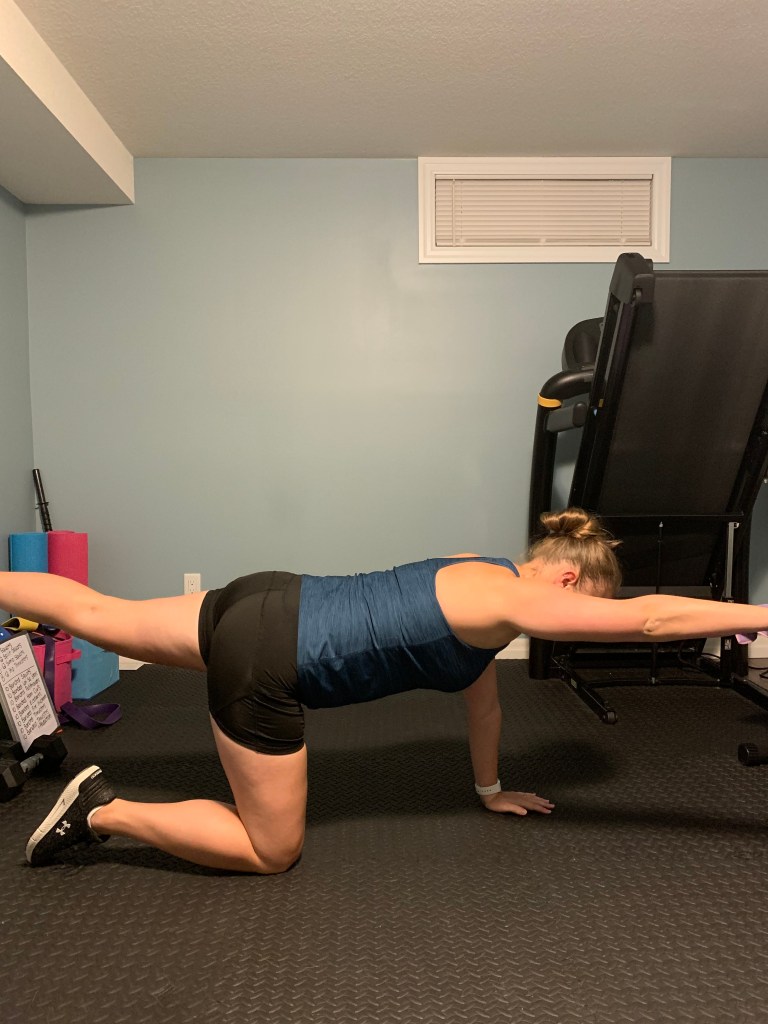
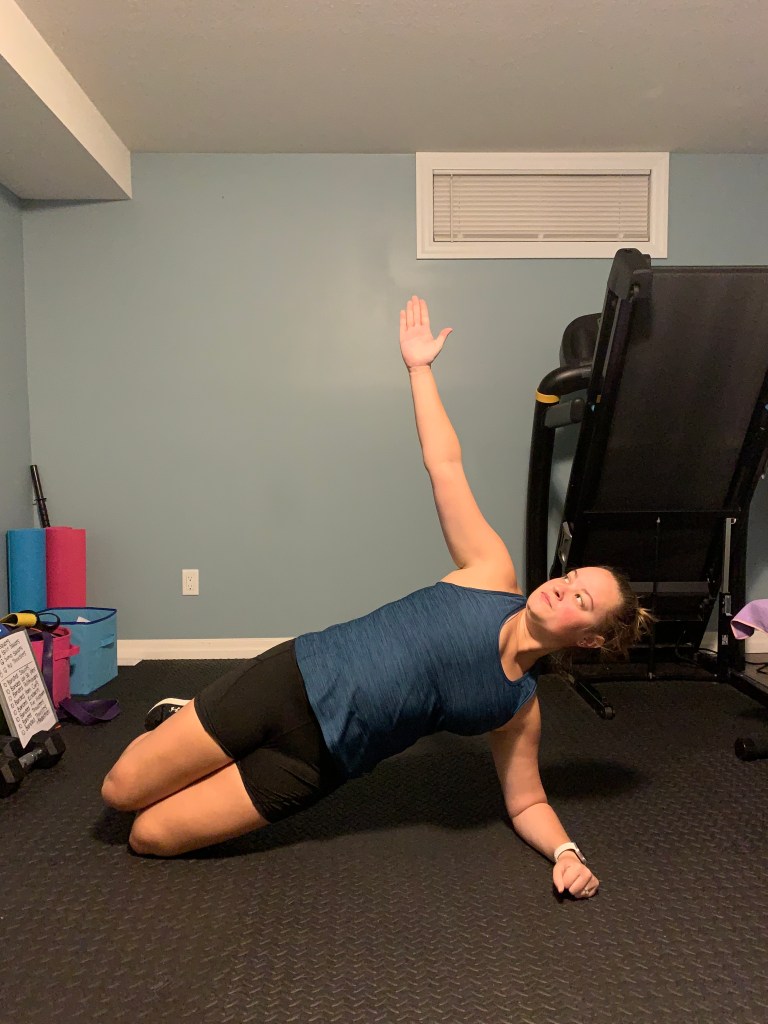
These are some exercises that can be appropriate to help reconnect to the core after birth and may help improve diastasis. If you are experiencing diastasis it is best to reach out and connect with a pelvic floor physiotherapist as they are best equipped to help you given your specific set of circumstances. Remember that diastasis shouldn’t be feared. It is a natural part of pregnancy and for some exists into the postpartum. We want to strive to improve our core control and increase our ability to maintain tension through the linea alba in order to improve diastasis. Sometimes it will take time to heal, but with proper guidance it can.
 ashleepedlowcoaching.ca