Are you getting enough sleep? Sleep is a super important part of your overall health and fitness routine and it is often one of the most neglected (have you ever used the term “team no sleep”, cause I know I have)! Now I do realize that as we talk today about the importance of sleep and the sleep cycle that depending on what stage of life you are in some of these tips may not work for you. If there are things that you can use then go ahead and use them, but understand too that if you are in a newborn stage where you may not be able to execute some of these behaviours that is okay as well. Take what will work for you and implement the rest at a time when it is appropriate for you.
First of all, let’s talk about why sleep is so important. Sleep allows both your mind and body to recharge which helps prepare you better for the tasks of your day. Think about a bad night of sleep, you usually feel it throughout the next day. Getting enough sleep can also help improve your immune system, your ability to concentrate and your ability to think clearly. Most adults require 7-9 hours of quality sleep each night.

So how does sleep work? After we fall asleep we move through 4 different stages of sleep.
- Stage 1 – a transition between wakefulness and sleep, can be characterized as light sleep. In this stage your heart rate, breathing rate and brain waves begin to slow down. This stage typically only lasts a few minutes
- Stage 2 – is characterized by deeper sleep as your heart rate and breathing rate decrease further. Your eye movements will also decrease as well as your body temperature. This stage of sleep is typically the longest stage of sleep during the night.
- Stage 3 – the stage that plays an important role in feeling refreshed and alert the next day. In this stage your heart rate, breathing rate and brain waves drop to their lowest levels. You muscles will also relax in this stage. This stage will be longer at the beginning of the night and decrease in length throughout the night
- REM – stands for rapid eye movement. During this stage of sleep your eyes will move back and forth while you sleep. Breathing, heart rates begin to increase as well as blood pressure. Your arms and legs also become paralyzed during this stage. Dreaming also typically occurs during the REM stage of sleep. It is believed that REM sleep plays an important role in memory consolidation (converting your recent memories over to your long term memories). Over the course of the night this cycle gets longer.
Throughout the night you will move through these 4 stages of sleep in a cyclical fashion. The average person’s sleep cycle lasts between 90-120 minutes.
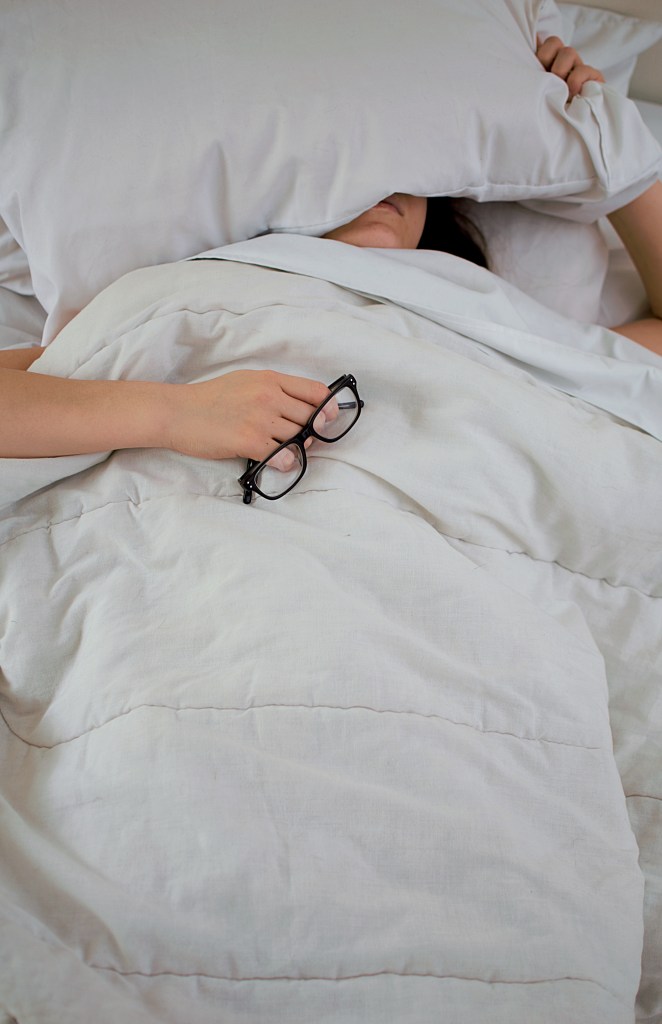
So how do we improve our sleep…well the answer to this can be simple for some and more difficult for others. I’m going to share some tips below that can help you start to improve your sleep, but I do understand that some mommas won’t be able to implement many (or even any) of these things at certain points in their motherhood journey. This is why it’s important to be gentle and patient with yourself on your health and wellness journey in the postpartum period. As you are able to increase both the amount of sleep you are able to get as well as the quality of sleep these things will start to become easier.
Here are some of the top tips for improving your sleep;
- Set a consistent bedtime and wakeup time – try your best to stick to this even on the weekends
- Set a cooler temperature in your home during sleep time (ideally about 65 degrees Fahrenheit or 18 degrees Celsius)
- Build a comfortable environment by prioritizing a high quality mattress, pillows and sheets (your preference will likely vary from someone else’s but prioritize what is best for you, if you sleep with a partner try to meet in the middle so that you are both experiencing the best environment possible)
- Keep your room dark. Blackout curtains are growing in popularity and there is a good reason for it. Your circadian rhythms (sleep-wake cycle) is affected by light and can be changed by light. If you are using light in your home at night keep it dim when possible. When we have lights turned on as it get dark out it tricks our body into believing that it’s not time for sleep but keeping these lights dimmed can help with this problem.
- Turn screens off for at least an hour before bed (screens include your TV, phone, tablets and computers). If you need to be on your screens during this time consider blue light blocking glasses or protectors on your screens to limit your blue light exposure just before bed.
- Avoid caffeine after 2pm if possible. Caffeine takes a long time to clear itself from your system and consuming caffeine in the afternoon can lead to disrupted sleep for many people
- Avoid alcohol in the hours leading up to bedtime. Alcoholic beverages take about 1 hour to clear from your system. Alcohol can negatively impact your quality of sleep so if you are drinking alcohol aim to leave at least 1 hour for every drink you have before bedtime to allow the alcohol to clear your system
- Exercise during the day. Exercise can be improve your sleep at night time no matter what time it’s performed during the day.
Remember that like changing fitness or nutrition habits, changing sleep habits is best done in small steps over time. Start with 1-2 small improvements and once you have made these consistent you can start to add more improvements from there. Small steps will help you improve both your quantity of sleep as well as your quality of sleep.
 ashleepedlowcoaching.ca