Core training through pregnancy and the postpartum is a topic that can be confusing and over the next four blog posts I want to shed a little bit of light into the topic by looking at some core exercises typically appropriate for each trimester and exercises for the early postpartum period.
I do want to start off by saying that although these exercises are generally considered safe in the first trimester each and every momma-to-be will be starting at a different point and your timeline might look a little different and that is okay. I will also give you some general cues over the course of the next four blogs, things that you can look for if you are needing to modify before or if you are good to keep pushing forward.
I first want to talk a little bit about the core and what we consider the core. It is becoming more common in recent years to talk about more than just the abs when we are looking at the core, however there are still numerous trainers out there that will refer to your abs as your core. When you hear me talking about the core I am referring to the full core canister. This includes your abdominal and back muscles as well as your diaphragm and your pelvic floor. Although these muscle groups are important to focus on at all stages in life during pregnancy the core canister is talked about at length. This is because as the belly grows the abdominal and pelvic floor muscles lengthen and weaken as the load on them is increased (this is normal during pregnancy). Although it is typically normal, we can help to combat it some by ensuring we are training our core throughout pregnancy. That’s where the following exercises come in.
Because the load increases on the core and pelvic floor as pregnancy progresses over the next few weeks we will talk about how you can continue to train your core safely and effectively as you work throughout your pregnancy. In your first trimester there typically isn’t a huge amount of need to change your core training. If you feel uncomfortable doing certain exercises then I would say avoid them, but as there isn’t a huge amount of strain placed on the muscles yet, there isn’t huge concern. Again, make your choices based on your comfort level and if there are exercises in this list that feel off or that you don’t enjoy skip them. You need to be comfortable with the exercises you’re doing or you likely won’t continue to engage in them consistently.
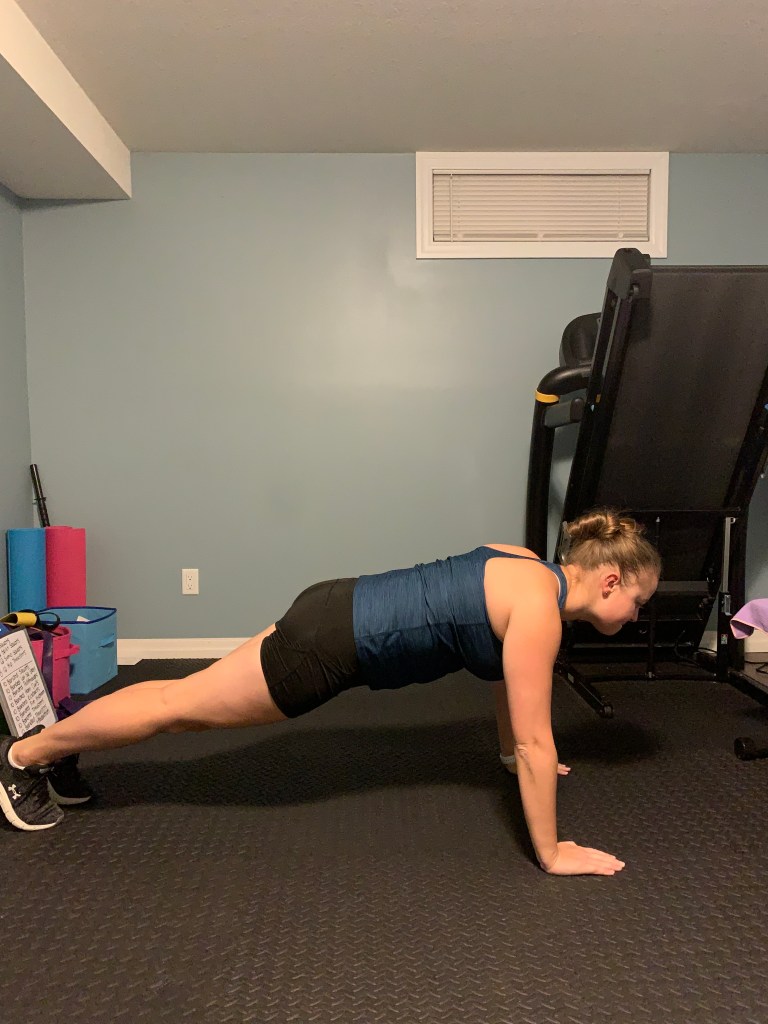
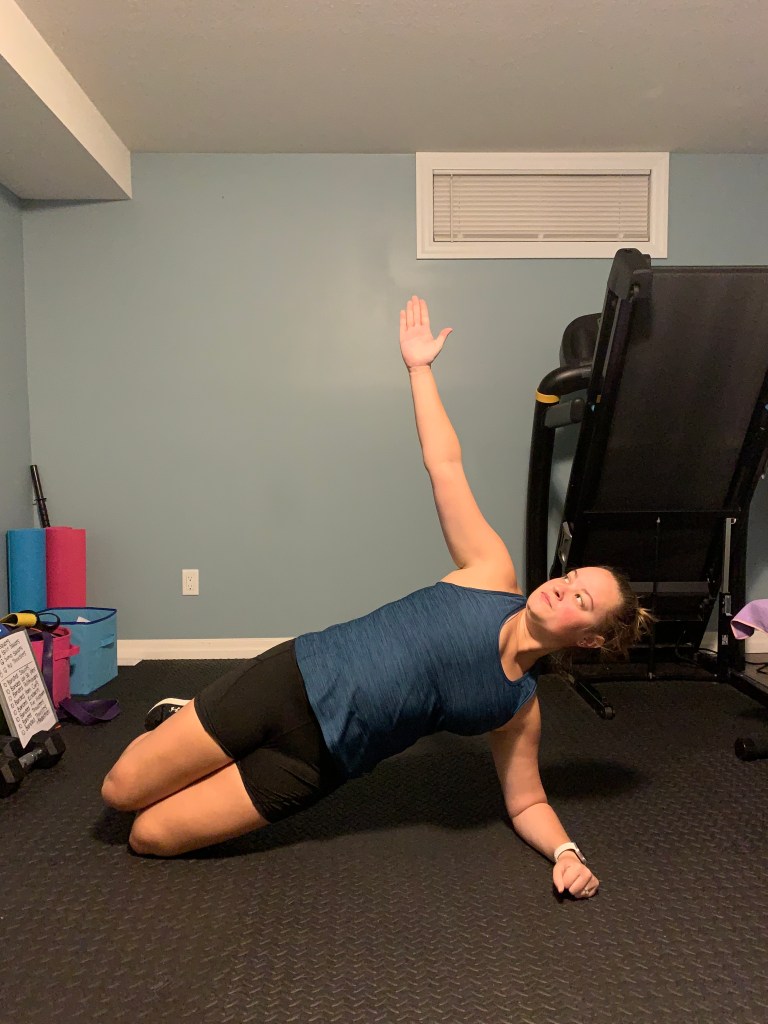
Plank: Begin in a pushup position. Ensure that you back is flat, shoulder blades are together and your head is in line with your spine. Ensure that your core is active as you hold to help maintain hip position throughout the hold (this includes both your abdominals as well as your back muscles). Hold your plank 15-30 seconds while maintaining good form. If your form starts to suffer stop or drop to your knees and hold your plank for the remainder of the time. When holding a plank from your knees maintain the same neutral spine position, you are just moving the pivot point from your toes to your knees which will make it a bit easier as you will be holding less of your body weight. The plank is a great core exercise but it is one that will be modified and eventually (likely) removed during pregnancy. For the first trimester most women typically have enough core control to continue to do the plank safely. Side Plank: Balance on your elbow and your knee (or your toes). As with the plank above we still want to maintain neutral spine as we hold a side plank keeping our head, neck, spine in a line with either our knees or our toes. This line will be on an angle, but should be straight. Ensure that your core and obliques (sides) are active throughout to maintain a level hip position (don’t allow your hips to sag or to be too high as this will ruin your straight line). With the side plank we also want to ensure that our hips and our shoulders stay stacked directly on top of each other so that our body isn’t rolling forward (most common) or backward (much less common). Hold your side plank for 15-30 seconds as long as you can maintain good form. If you begin on your toes you can drop to your knees for the remainder of the hold if required.
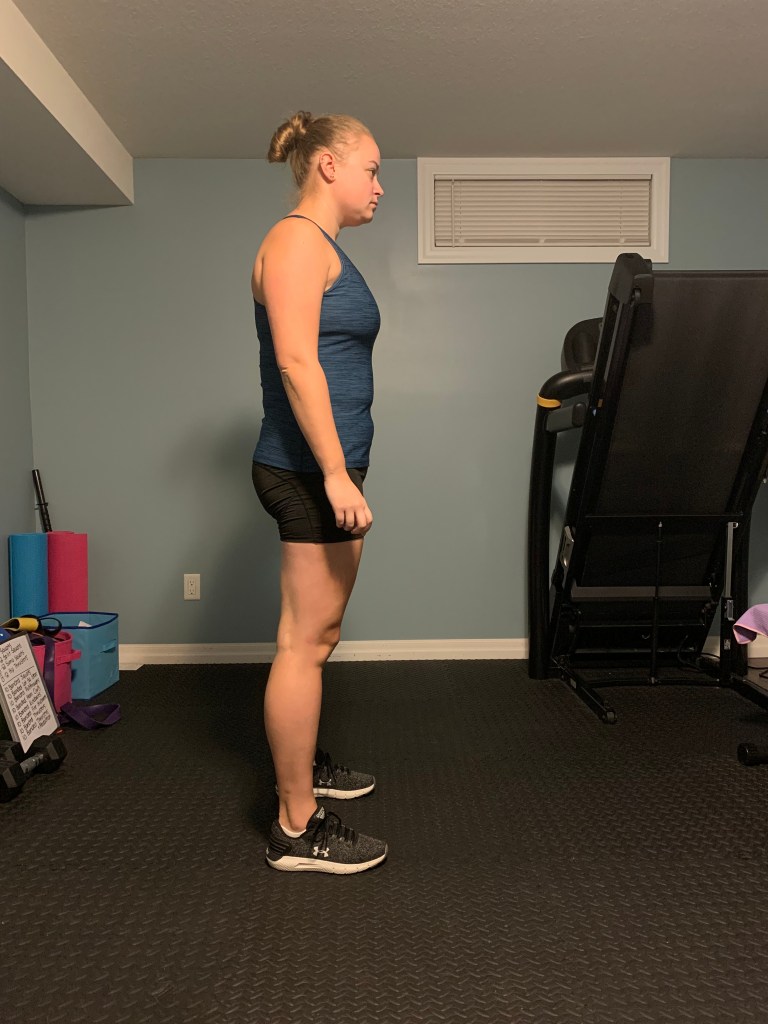
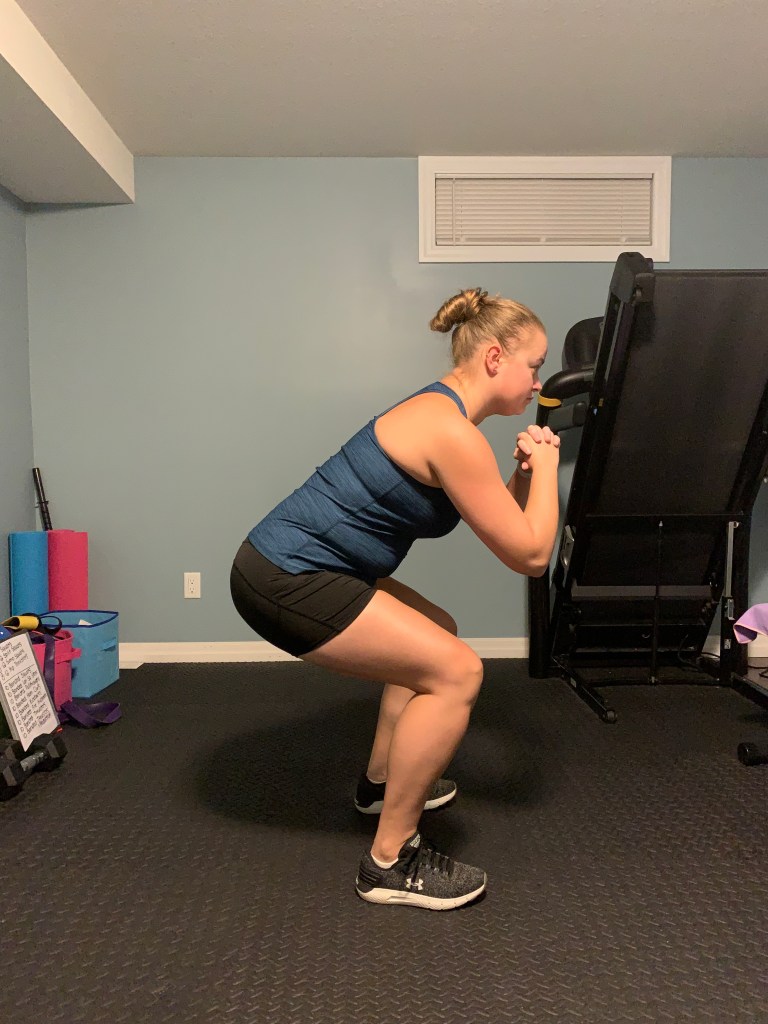
Squat: Although squats are typically considered a lower body exercise, squatting also requires some core activation as well. Start with feet shoulder width apart standing tall. Begin your squatting motion by driving your hips backwards like you are reaching back with your butt towards an imaginary chair while keeping your chest up. As you drop your hips backwards your keep your core braced throughout the movement. Once you reach the bottom of the motion, drive through your heels to stand keeping your core tight throughout the movement. Complete 10-15 reps of the motion for upwards of three sets. To increase the difficulty of this movement try adding a band, dumbbells or a barbell to increase the resistance.
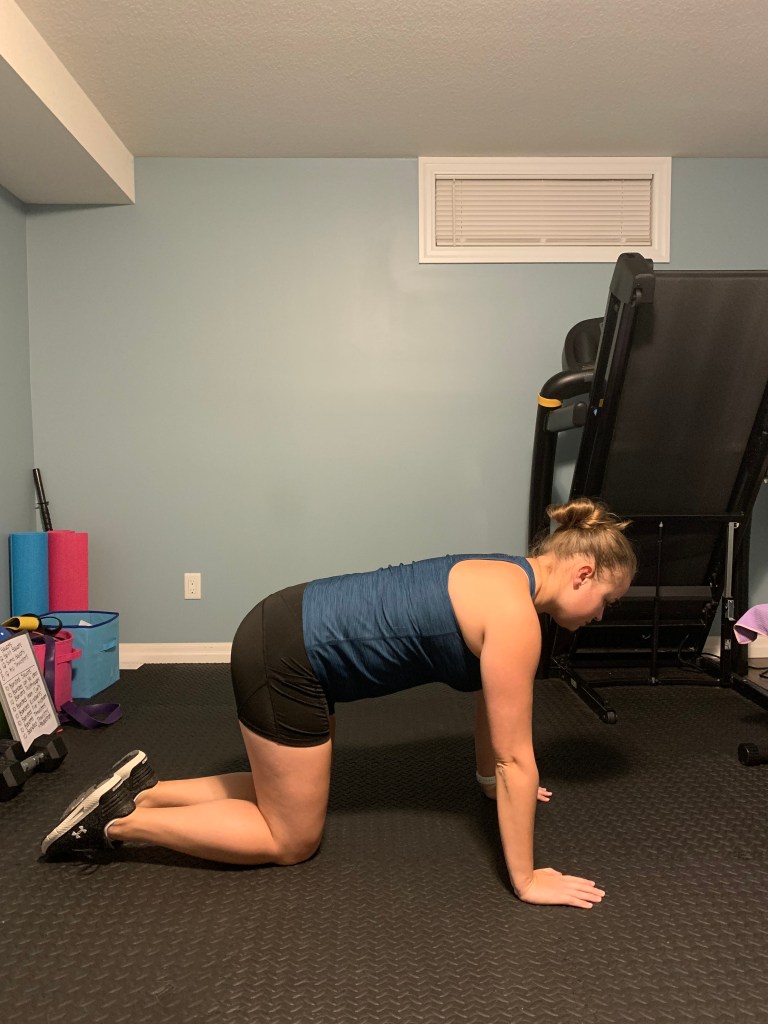
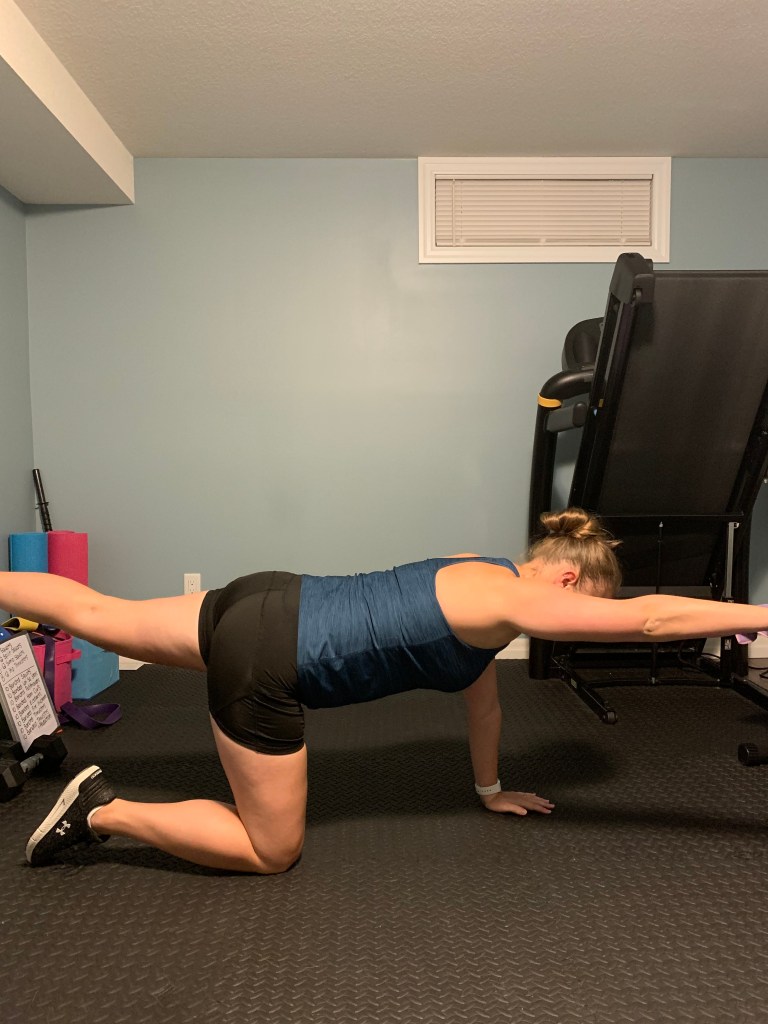
Bird Dog: Begin the movement on your hands and knees. As you activate the entire core (including the abdominals, obliques, back and pelvic floor) lift the opposite arm and leg up reaching them straight out. Keeping your core tight will help you maintain balance throughout the movement. If you are struggling with balance in this movement try starting with just the legs and leave both hands on the floor. As your core strength improves your balance in this movement will improve and you will be able to begin to lift the palms as well. Complete 10 reps alternating sides for a total of 3 sets.
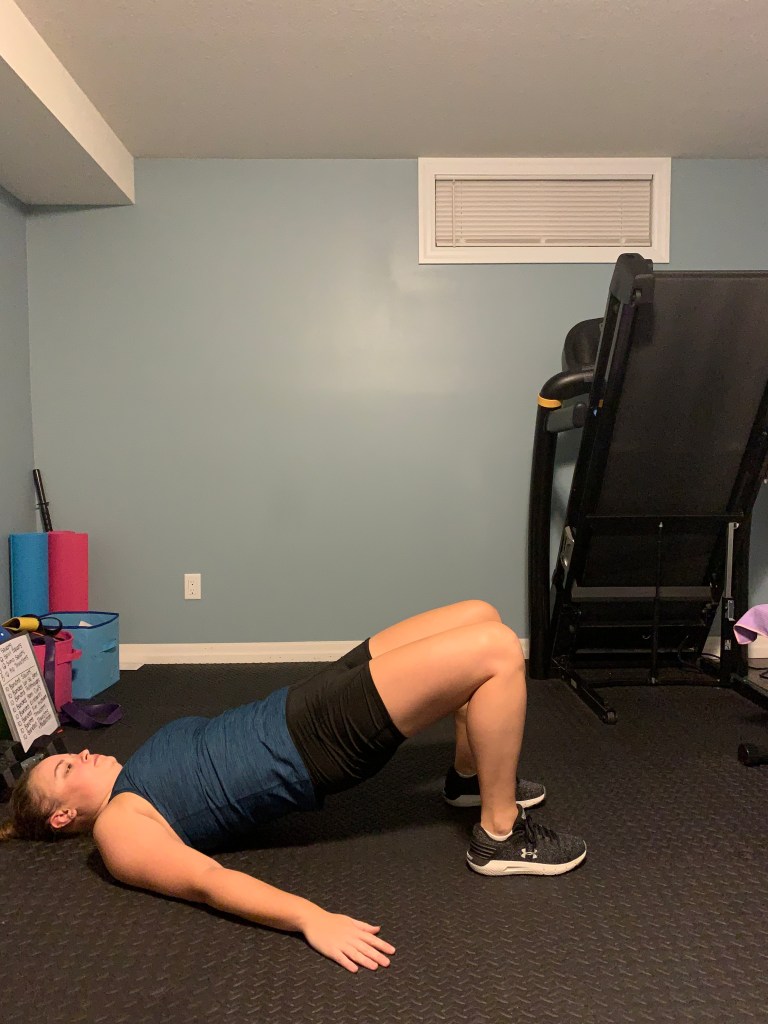
Glute Bridge: Begin lying on your back with your knees bent. As you activate through your core (including your back and pelvic floor) lift your hips off the floor squeezing through the glutes. Then lower your hips back to the floor. Aim to keep your back straight throughout this movement and avoid arching the low back when your hips are at the top of the movement. Complete 10-15 reps and aim for 2-3 sets. To increase the difficulty of this movement you can add a dumbbell to your hips (or your quads) or a mini band above your knees.
There you have 5 exercises that are generally considered safe for your first trimester. Remember that as you train throughout your pregnancy you want to tune in to your body. Find that things that feel comfortable and forgo the things that don’t. If you’re feelings more tired than normal don’t be afraid to adjust these exercises to suit your energy level for the day. Movement during pregnancy is going to look different for everyone so this is just a basic guide. Take what you like and leave the rest. Next week we will look at some of the modifications you may want to consider as you enter your second trimester so stay tuned!

 ashleepedlowcoaching.ca
2 thoughts on “Core Training Part 1: Core Exercises for Your First Trimester”