Diastasis Recti generally gets a bad rapport. Women learn about it, usually for the first time during pregnancy and then their goal is to prevent it from happening to them. Diastasis Recti is a necessary and normal part of pregnancy. As the belly grows the tissue between your two six pack muscles (linea alba) is required to stretch and make room for the growing baby. Generally this separation will present in late second or third trimesters and often persists into postpartum. Some women will experience spontaneous healing in the postpartum and other women will need further interventions.
When we consider Diastasis Recti we need to consider the size of the gap as well as the tension in the connective tissue. You are able to have a gap and still be able to appropriately manage intra-abdominal pressure so we want to ensure we are not focusing solely on the distance between the two muscles. If you are struggling to control intra-abdominal pressure you will often experience some form of doming or coning along the centre of your abdomen. This occurs because pressure increases in the abdominal cavity and the internal organs press out against the weakest part of your core (in the case of Diastasis Recti, this is generally the linea alba). If you notice coning, stop the exercise. You can try re-adjusting and engaging your core then try the exercise again but if you are still experiencing doming then it may be best to remove or modify the particular exercise you are performing until you are able to perform it without coning.
I do want to say that if you are struggling with Diastasis Recti a pelvic health physiotherapist can be a great asset to have in your tool bag. A pelvic health physiotherapist will be able to guide you along your specific journey. Let’s look at some general exercises that can help you reconnect with your core and pelvic floor in the postpartum period and are Diastasis Recti safe.
Exercise 1: Heel Slides
Begin by lying on your back and inhale as you slide your foot away from you. Exhale as you drag your foot along the floor lifting in your pelvic floor as you do so.


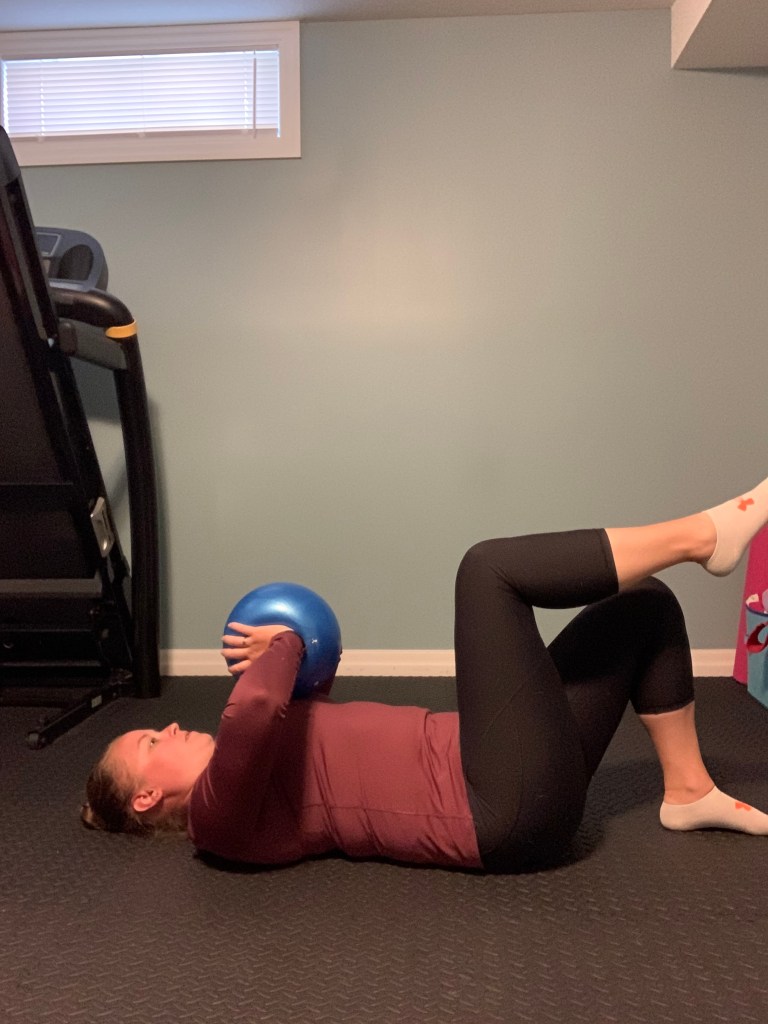
Exercise 2: Ball Squeeze with March
Lying on your back place a ball or a pillow between your hands with your knees bent. Inhale into your belly and exhale as you lift your foot up off the floor and press your hands towards each other on the ball. As you exhale ensure you are lifting through your pelvic floor.

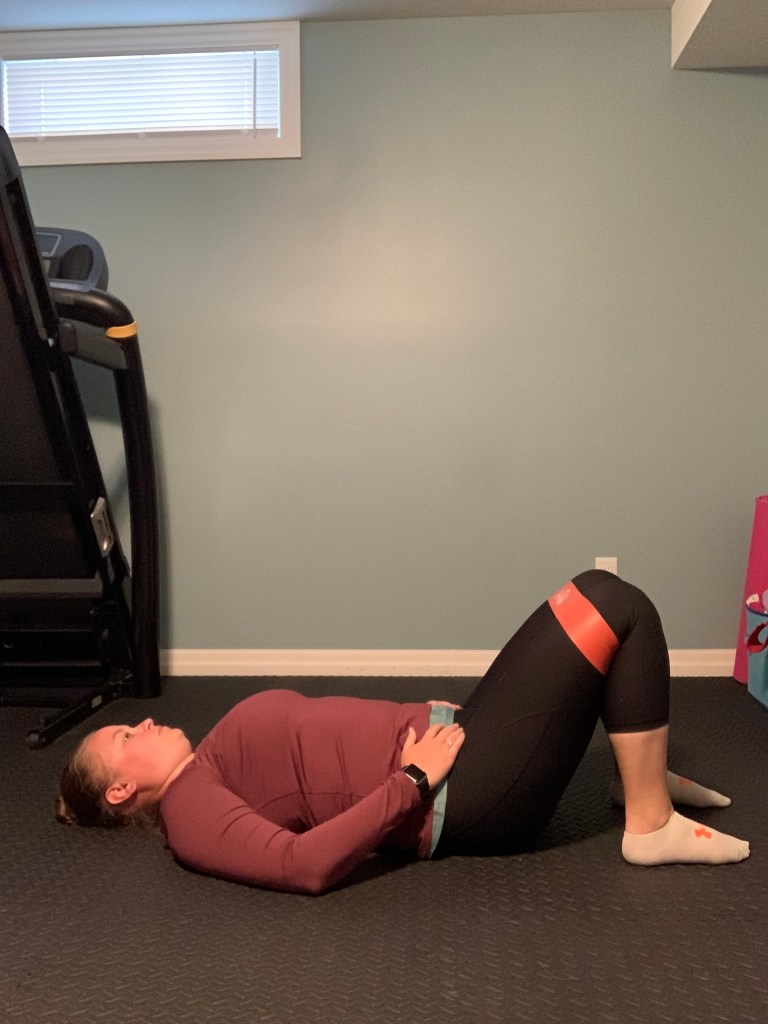
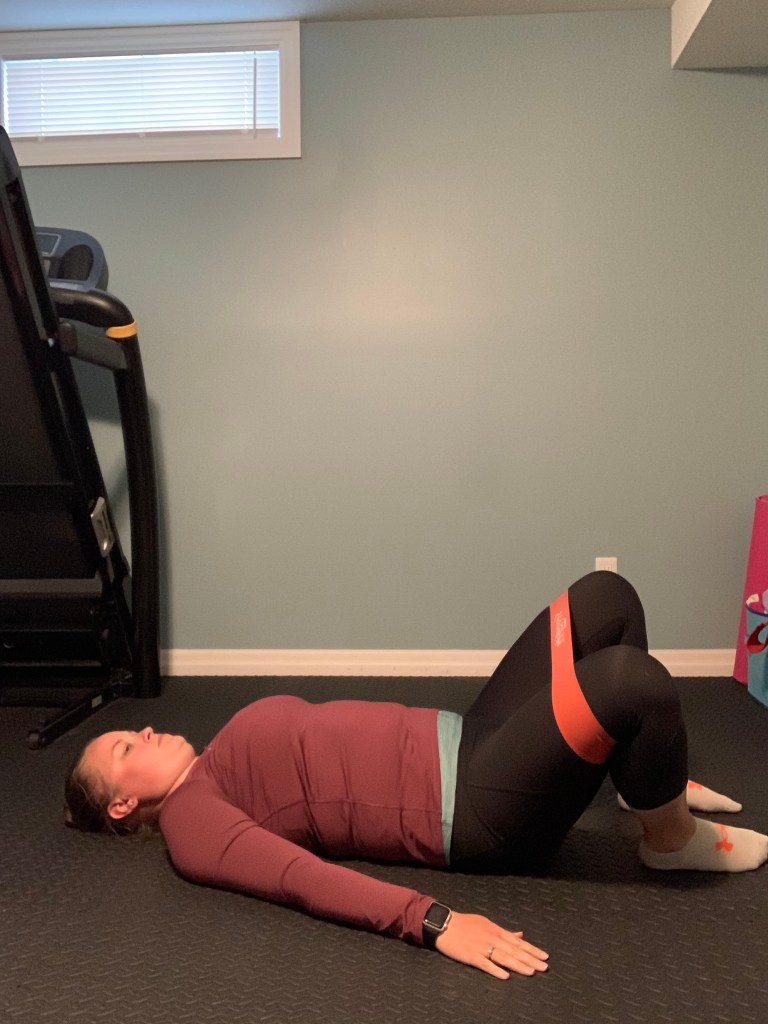
Exercise 3: Banded Knee Rollouts
Lying on your back in the same position as the march place a band around your thighs. If you don’t feel ready to use a band in the early postpartum just do this exercise without one. Inhale as you drop your knee out to the side and exhale as you lift your knee back to the starting position. Ensure that as you exhale you are lifting through your pelvic floor.
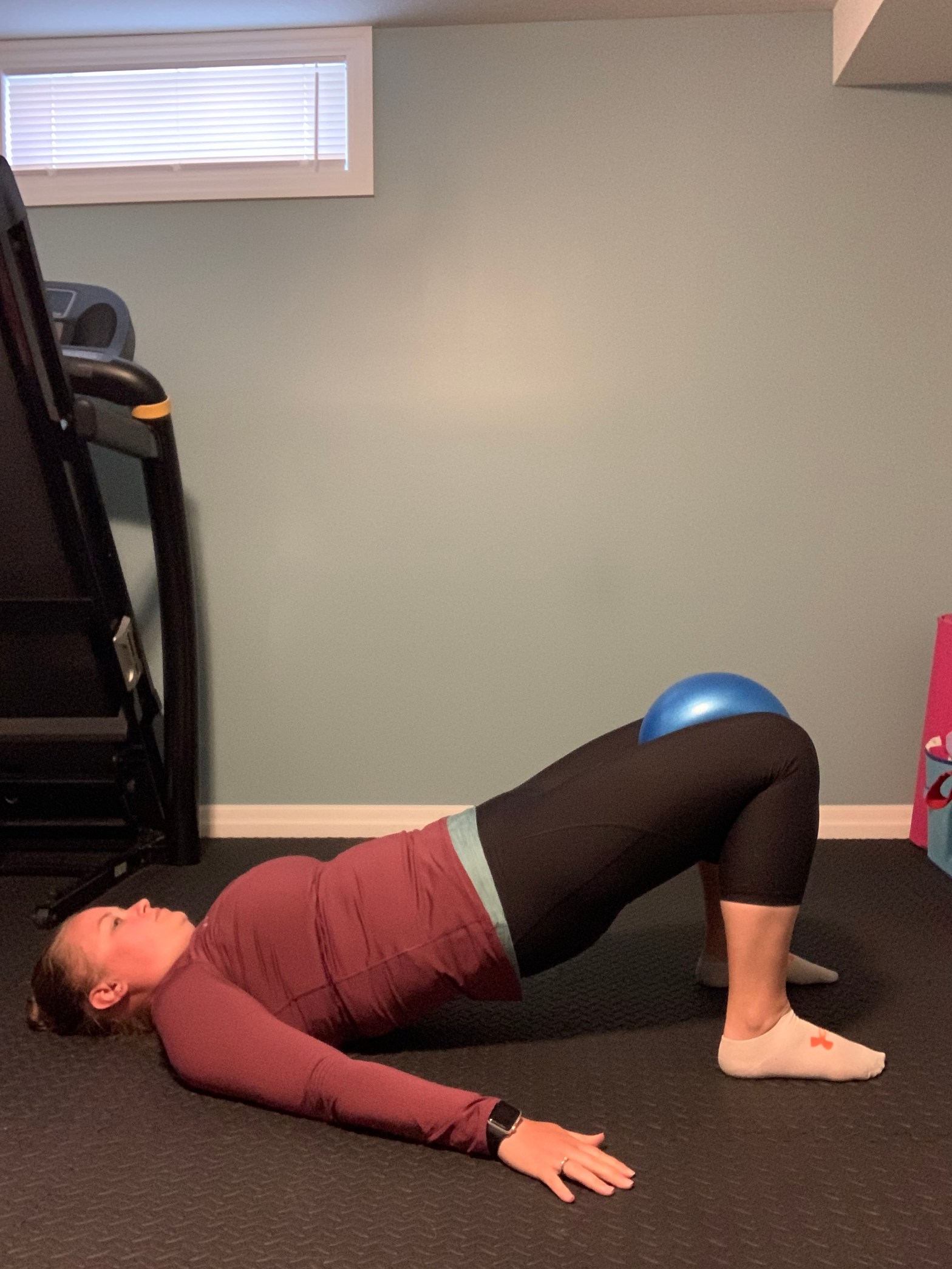
Exercise 4: Glute Bridge Ball Squeeze
Lying on your back place a ball or a pillow between your knees. Inhale filling your belly and rib cage and exhale to lift the hips into the air while squeezing the ball. Focus on lifting in the pelvic floor as you lift the hips and inhale to lower back to the floor.
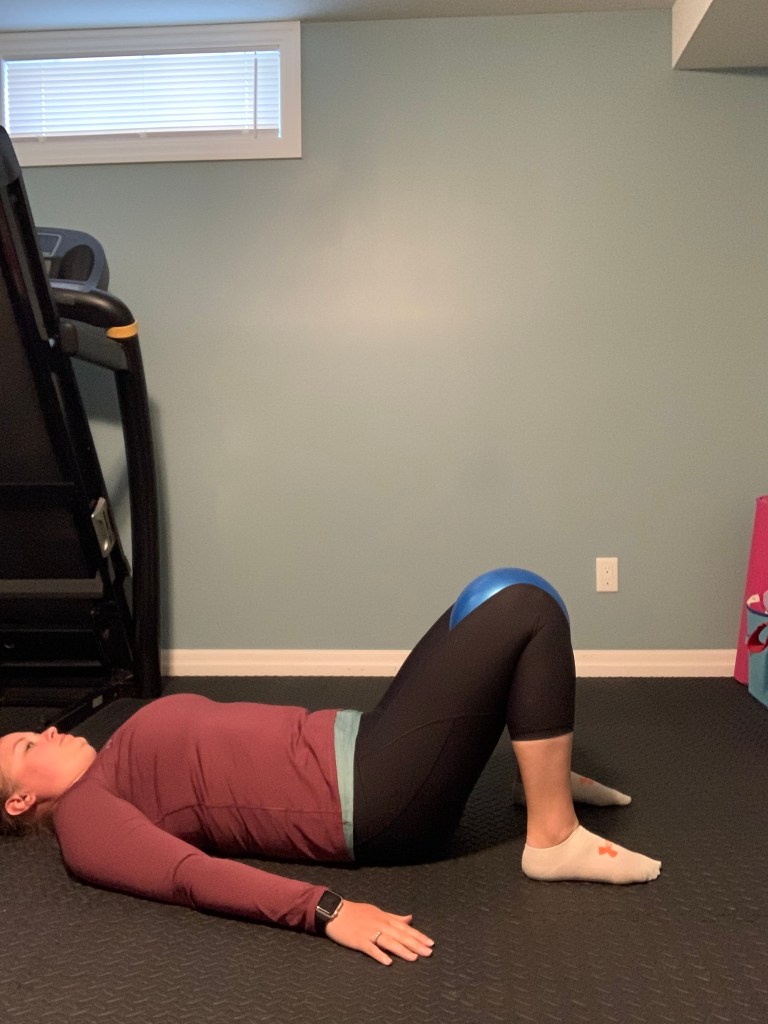
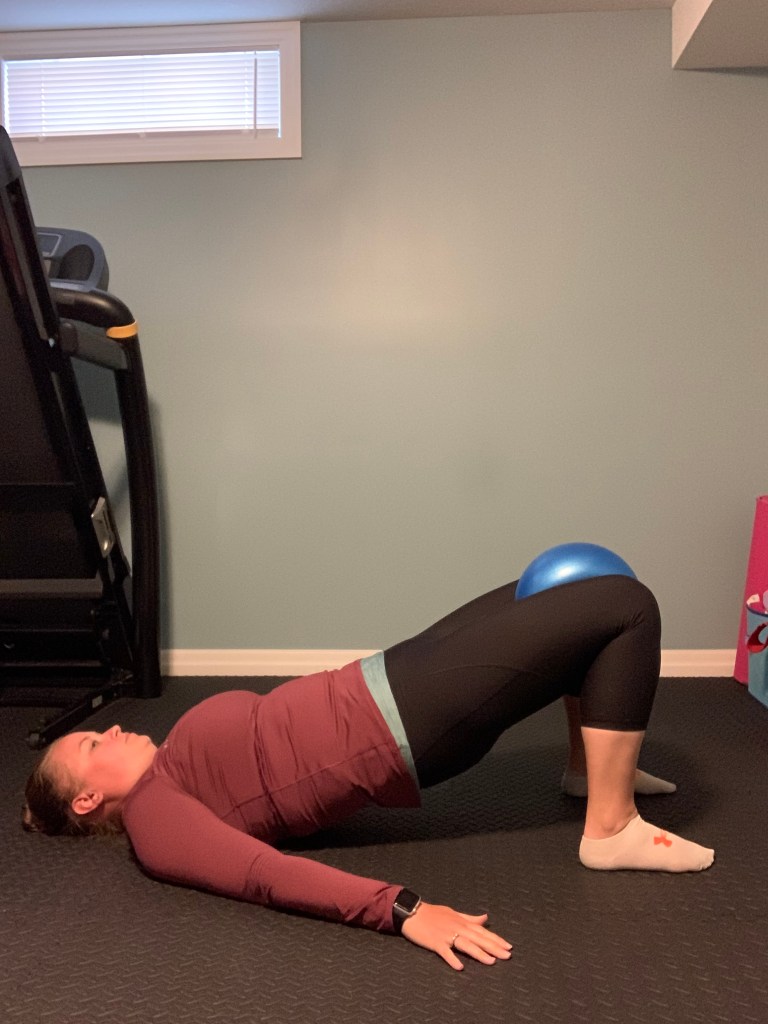
Exercise 5: Kneeling Pallof Press
Anchoring your band so that it is at chest height when you are on your knees begin with your hands at your chest. Inhale filling your belly and rib cage and exhale as you press the band straight out from your chest lifting through your core and pelvic floor.

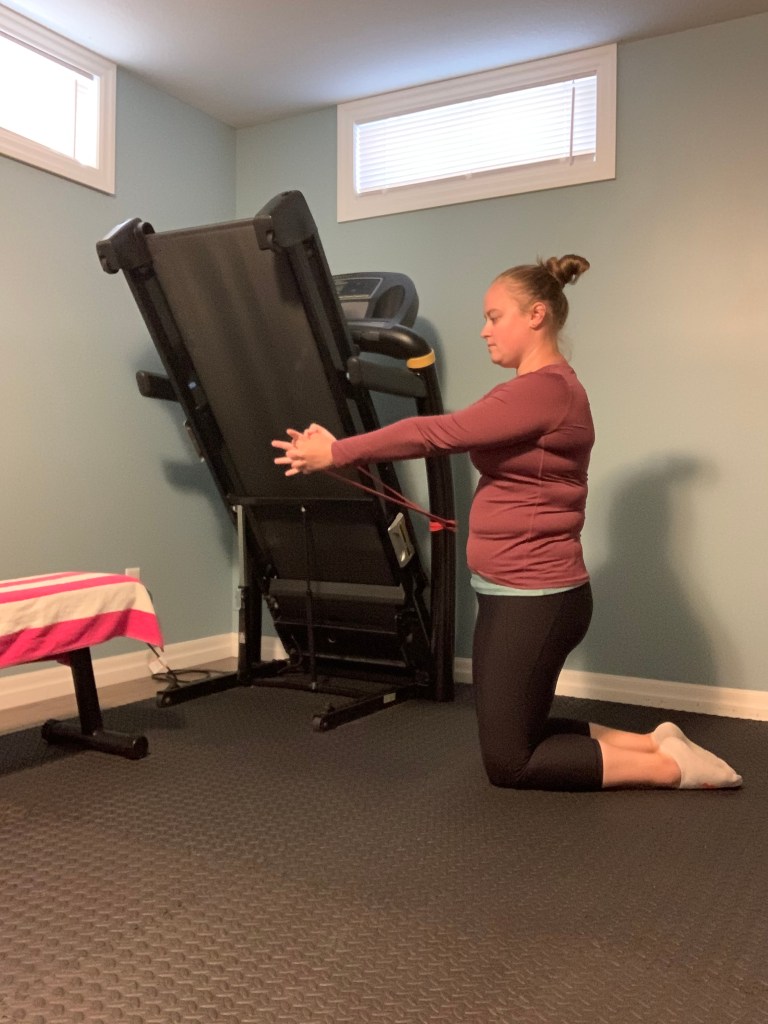
There you have it…5 Diastasis safe exercises you can use on your healing journey. If you are experiencing Diastasis it is best to reach out to a pelvic floor physiotherapist as they will be able to prescribe something for your specific case. These exercises are intended to help but a pelvic floor physiotherapist will be an additional resource. If you have questions about safe exercises or coaching please reach out here. Have a lovely week beautiful souls!
 ashleepedlowcoaching.ca