The SI joint (sacroiliac joint) is the junction between your sacrum and your pelvis and is located on the back of your pelvis. This is a major point in your body where load is transferred from your upper body to lower body and vice versa. Basically this is a fancy way of saying that there is a lot of force that moves through these joints. As pregnancy progresses and relaxin increases joint laxity throughout the body can increase and this may affect the SI joint leading to discomfort or pain. Generally pain or discomfort is only felt on one side of the sacrum not both.
The Posterior Oblique Sling is a muscle group that runs from the runs from the lat muscles (large muscle on your back) to the opposite glute. This muscle sling helps to stabilize the SI joints in your low back. There is an SI joint on each side of the sacrum (which means we have two). These two joints will strive to achieve balance between the two of them but that doesn’t mean that they will have the same mobility. Generally when we have pain and discomfort in this area it’s because one side it restricted or tight and the other side is lax or loose. Postural changes that occur during pregnancy and weakening muscles can also cause pain and discomfort during pregnancy at thp point of the SI joint.
Strengthening this sling involves using both the lat muscle and the opposite glute muscle at the same time. Below you will find three exercises that can be used to help you strengthen this sling and introduce more stability to the SI joint. When it comes to the SI joint it’s also important to focus on mobilization of the side that is tight as well (we will save this discussion for another post though)
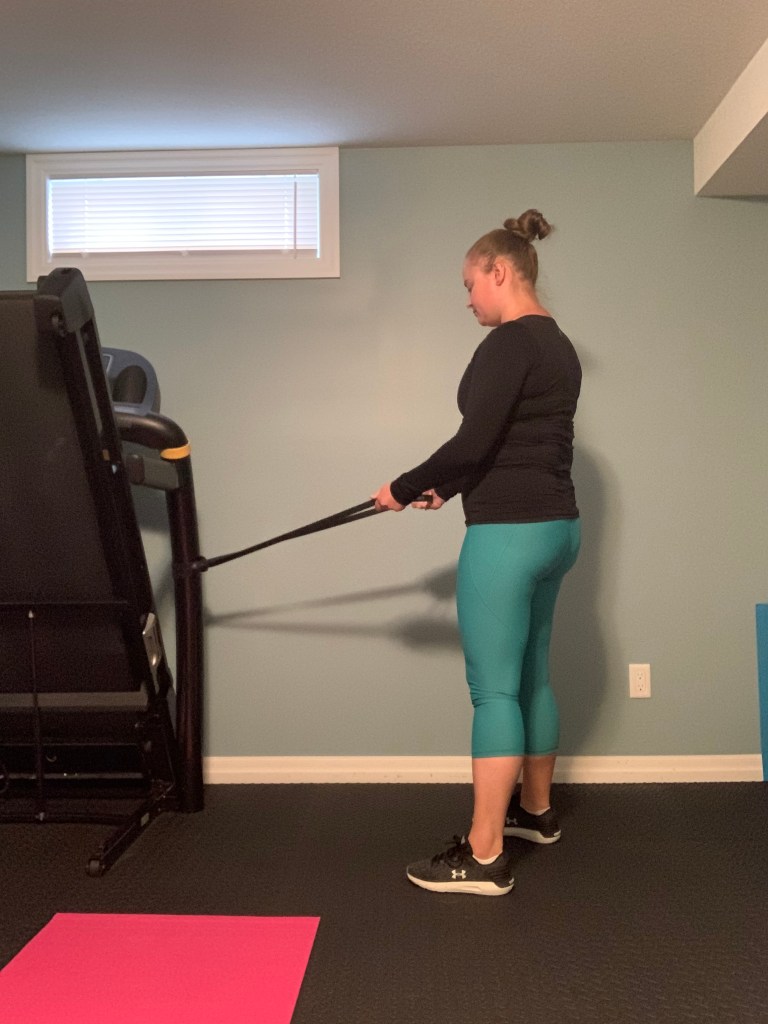
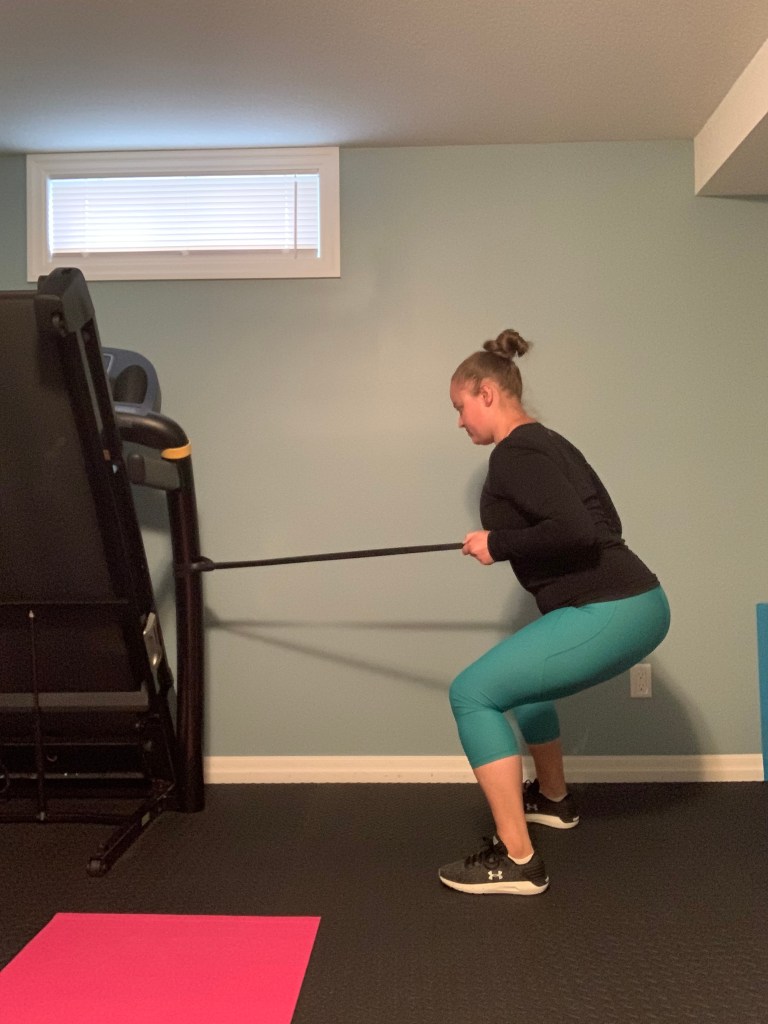
Exercise 1: Squat + Banded Row
Begin by anchoring a band to something sturdy at about the height of your hips (or a bit higher). Position yourself to complete a squat and drop your butt backwards like you are reaching your bum out towards an imaginary chair behind you. At the bottom of the squat row against the band by pulling your elbows straight back and squeezing your shoulder blades together. Bring your arms back forward and return to a standing position
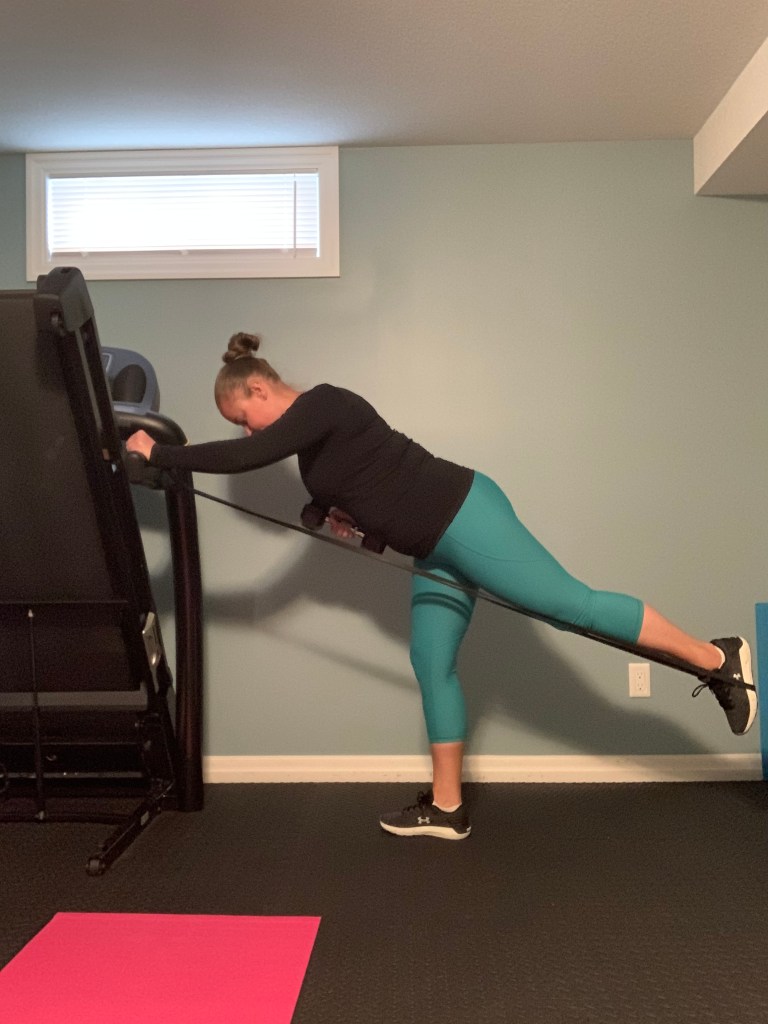
Exercise 2: Glute Kickback + Row
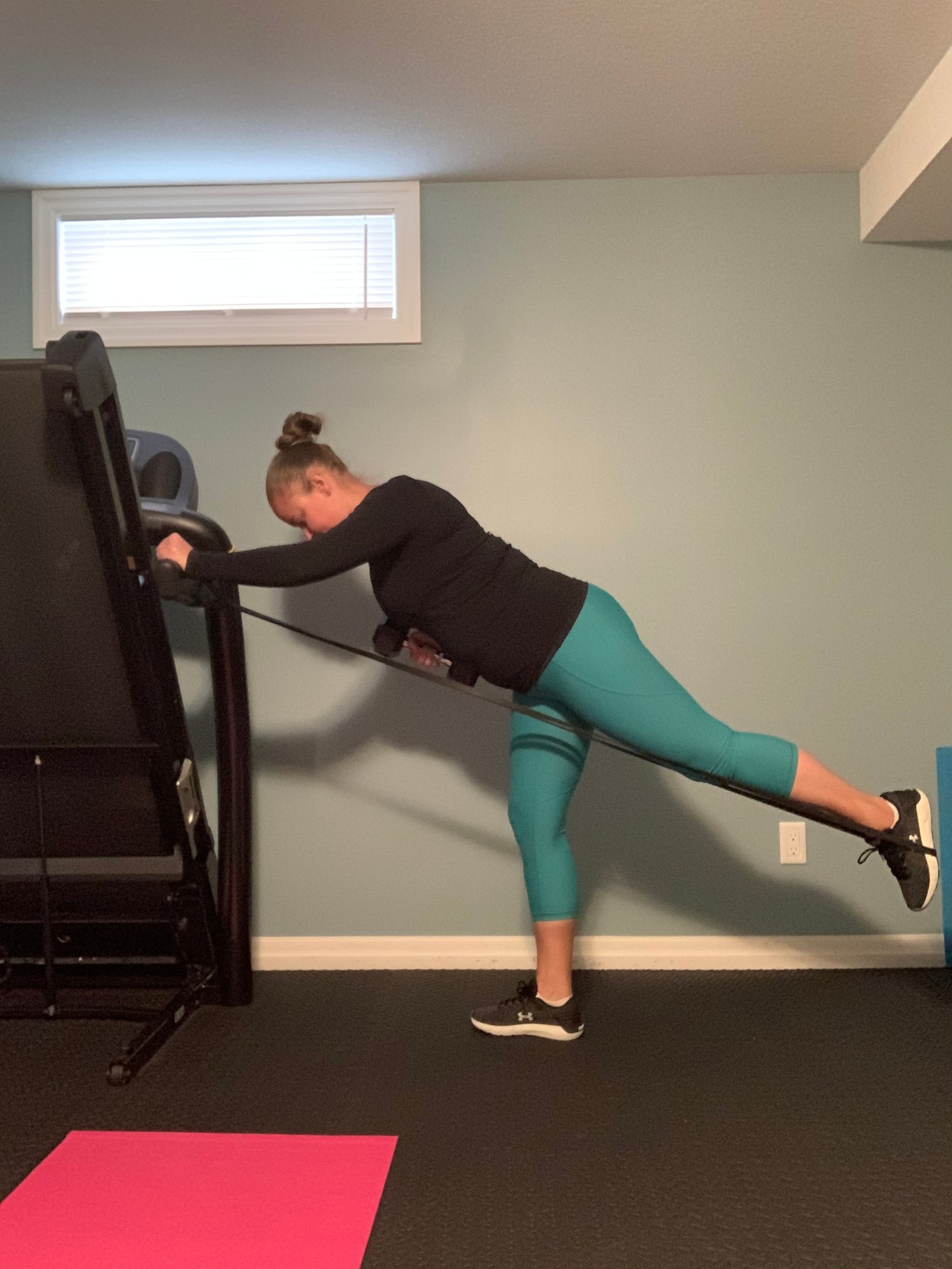
Anchor your band at about chest height and place your foot through the band. Ensure you have a slight bend in your knee of the standing leg. Grab a dumbbell in the opposite hand (as the foot that will be kicking back). Once in starting position kick your foot out behind you keeping your core tight and a neutral spine. As you kick your foot out row the dumbbell up and squeeze your shoulder blades together as you do so. Return to your starting position. Ensure that you complete on both sides.
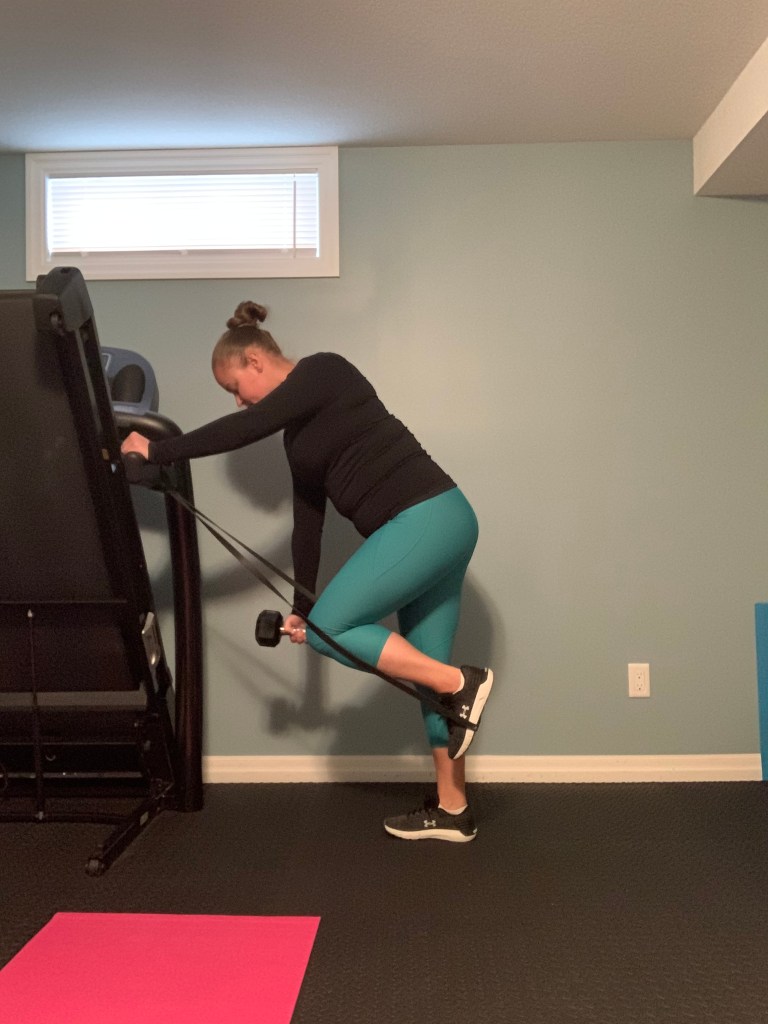
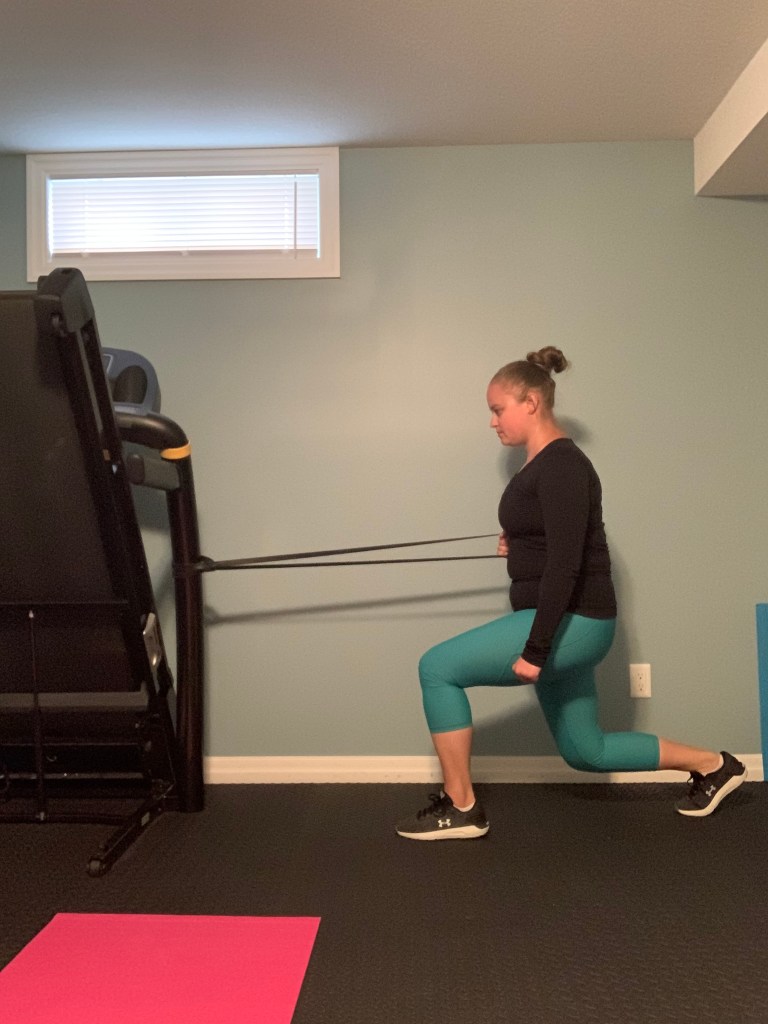
Exercise 3: Reverse Lunge + Banded Row
Begin by anchoring a band to something sturdy at about the height of your hips (or a bit higher). Ensure that the band is on the side that will be stepping backwards (opposite to the stationary leg). As you step back into a lunge drop your back knee towards the floor and row your elbow backwards squeezing your shoulder blades together. Return to the start position. Ensure you repeat on both sides.

SI joint pain and discomfort isn’t present in all pregnancies but it may cause pain and discomfort as you progress through your pregnancy. A pelvic health physiotherapist can be very helpful in this area and these exercises used in conjunction with a pelvic floor physio can help to strengthen the SI joint. If you are looking for coaching guidance please reach out here and I will help keep you active throughout your pregnancy and postpartum phase.
 ashleepedlowcoaching.ca