We talk heavily about the core and pelvic floor throughout pregnancy and the postpartum period. We’re told to do our Kegels and strengthen our pelvic floor but it’s equally as important to learn to relax the pelvic floor. Today we are going to talk about strengthening and reconnecting to the core and pelvic floor in the postpartum period, but I will also do another post in the future about relaxing the pelvic floor as well. Through pregnancy, labour, delivery and postpartum both are a key component of your overall health and wellness.
During pregnancy the weight of the growing baby places more and more stress on the pelvic floor. As the uterus and the belly expand the core and pelvic floor become weaker and less efficient. As muscles stretch and lengthen they often become less effective at what they are intended to do. This is why so much emphasis is placed on reconnecting to the core and pelvic floor in the postpartum period. By slowly introducing exercises that can help you strengthen and connect to these areas can help you in the postpartum period. We want to remember that the body is also still healing during this timeframe so it important to be aware, to listen to your body and not to overdo it, healing still needs to be the number one priority during this period.
I want to take the time to talk about 5 exercises that you can use in the early postpartum period to start to reconnect to the core and pelvic floor. These exercises are intended to be gentle enough to begin early postpartum and should focus on the core and pelvic floor connection without overtaxing the body. Remember that your body has just been through a significant event and it does require time to heal. These exercises are not intended to be any more strenuous than your typical daily activities.
Exercise 1: Diaphragmatic Breathing
This breathing exercise seems rather simple, but immediately postpartum it is effective at helping us reconnect to our deep core and pelvic floor muscles. This breathing technique will be used in all of the following exercises as a base so it’s best to master this breathing technique first. This exercise can be done laying on your back as illustrated below, but can also be done from a seated or standing position as well. Placing one hand on your chest and one on your belly may help with some tactile feedback. Start by inhaling. As you inhale be sure to fill your rib cage, belly and feel the pelvic floor lengthen and press downward. As you exhale, blow all the air back out and feel your ribs and abdomen sink in and your pelvic floor contracts and lifts. If you are struggling with the contract and lift in the pelvic floor just start by relaxing it back to its starting position.


Exercise 2: Heel Slides
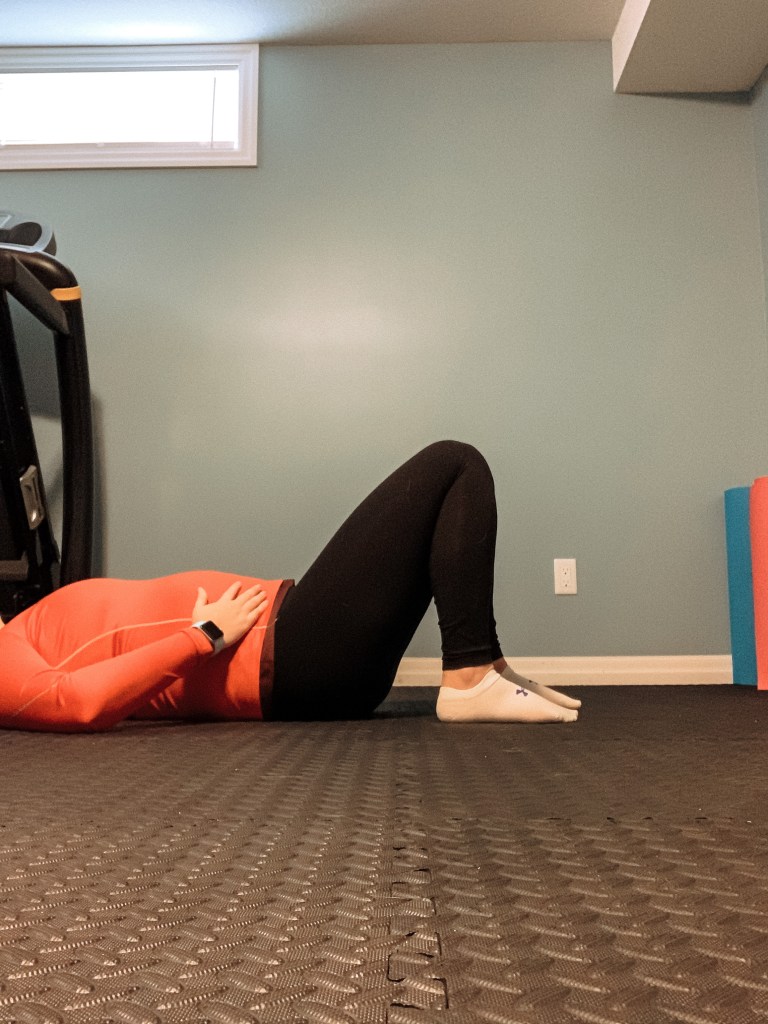
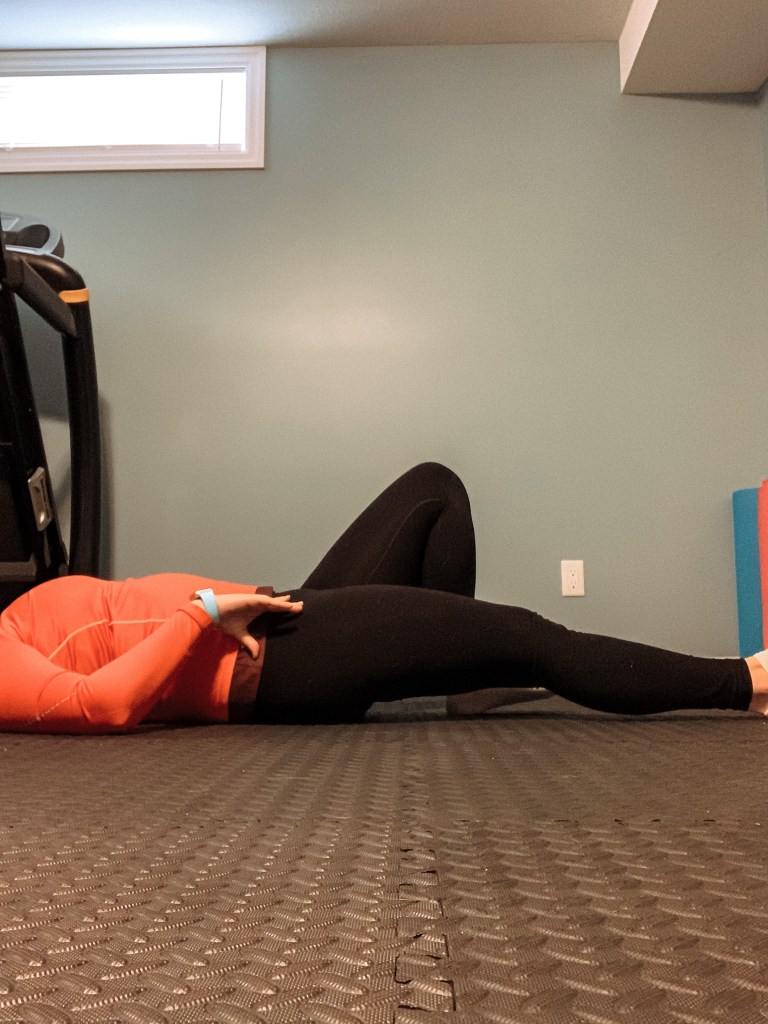
Begin by lying on back with knees bent and feet flat on the floor. Using the breathing technique above slide your heel away from your bum and then back towards it. As you inhale slide your heel along the floor away from you and as you exhale pull your heel along the floor back towards your bum. As you inhale be sure to fill your rib cage and belly and feel that pelvic floor pushing down or away from you. As you exhale and pull the heel back towards you ensure that you are engaging and lifting through the pelvic floor.
Exercise 3: Supine Ball Squeeze
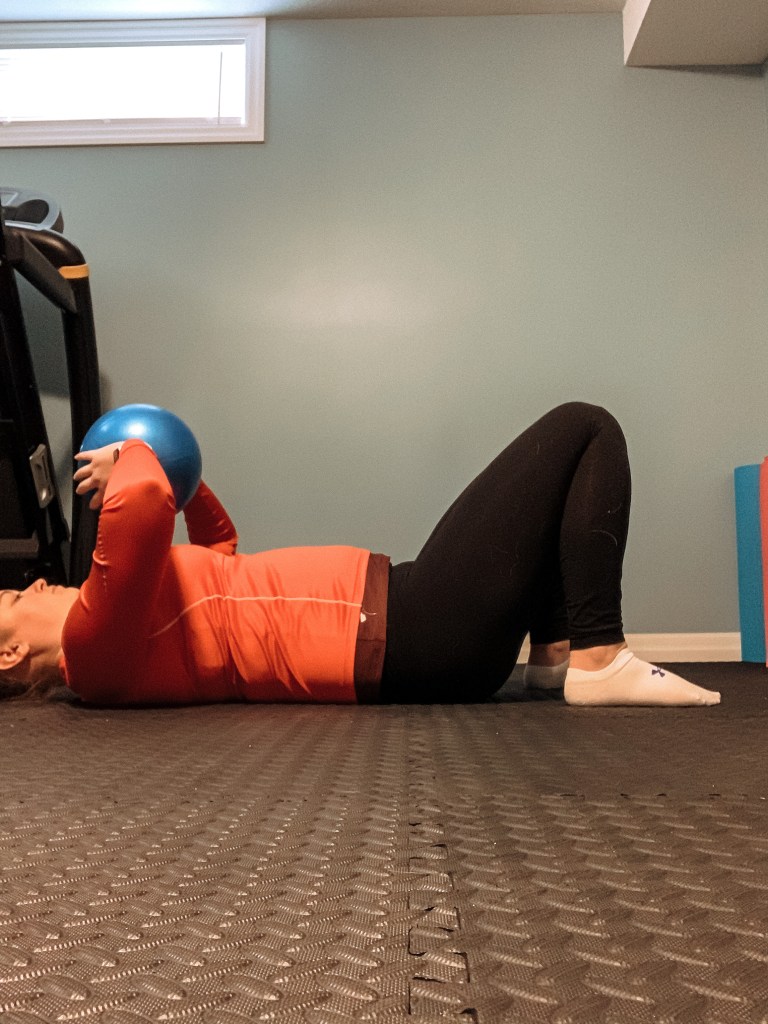
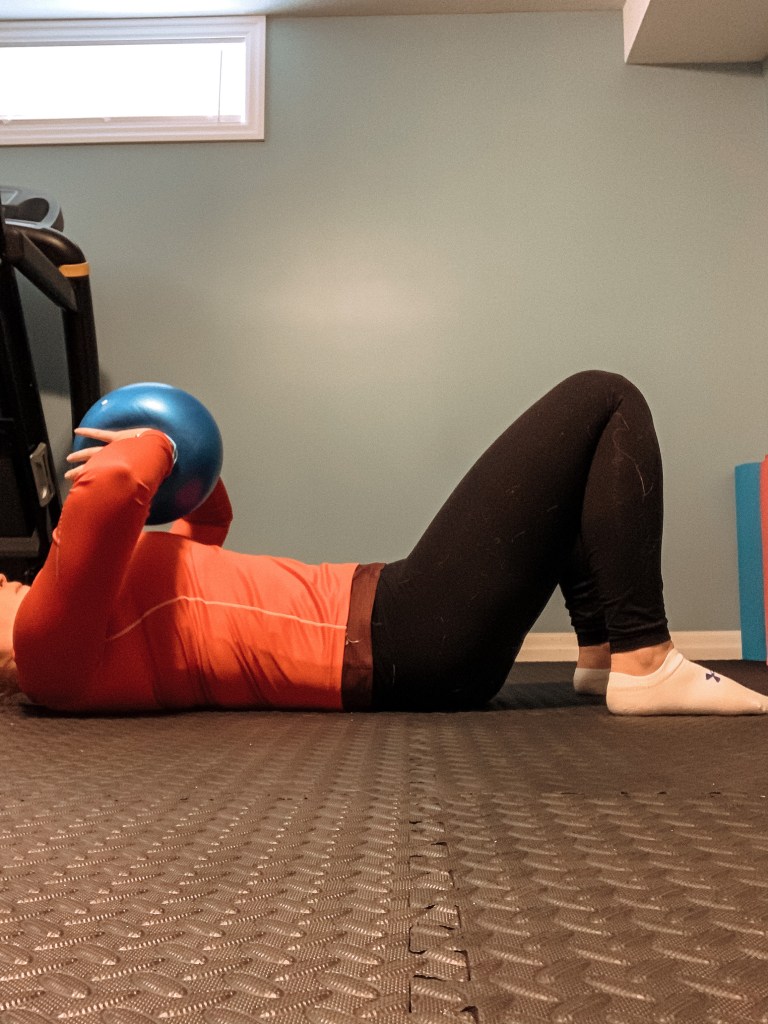
The next 3 exercises are going to involve use of a small ball. A Pilates ball works well for these exercises (they run about 10-15 dollars if you would like to purchase one), however a kids ball or a pillow will work just as well. For this exercise you will be lying on your back with your knees bent and feet flat on the floor. Place the Pilates ball between your hands over your chest. Again using the same breathing technique here inhale filling your rib cage and belly and feeling your pelvic floor lengthen. As you exhale squeeze the ball between your palms while engaging and lifting through your pelvic floor.
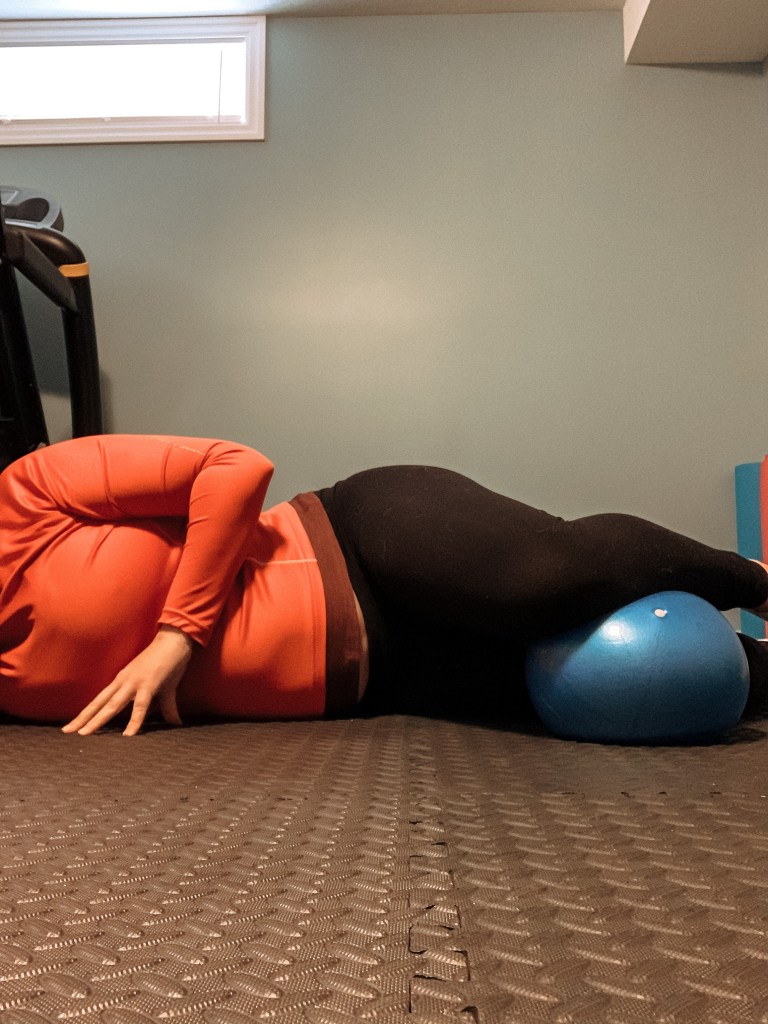
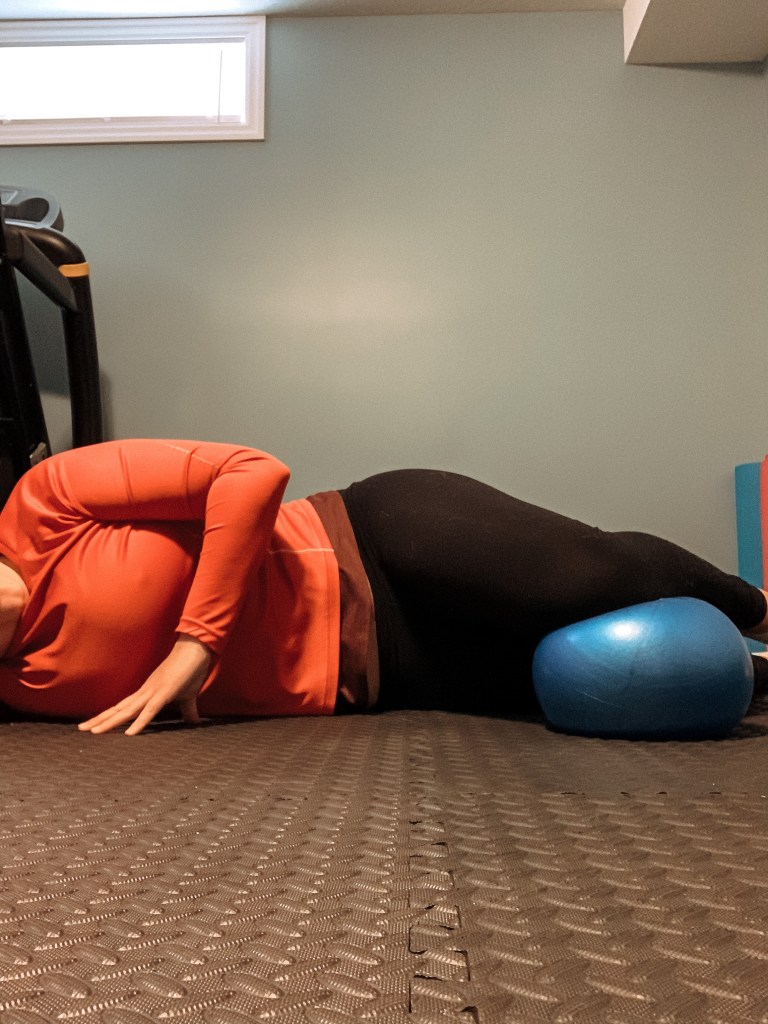
Exercise 4: Side lying Ball Press
For this exercise you will be laying on your side your bottom leg straight out and your top knee bent. Place the ball between your knee and the floor. Begin by inhaling with that same breathing pattern expanding through the chest, belly and lengthening into the pelvic floor. As you exhale lift the pelvic floor and press your knee into the ball against the floor.
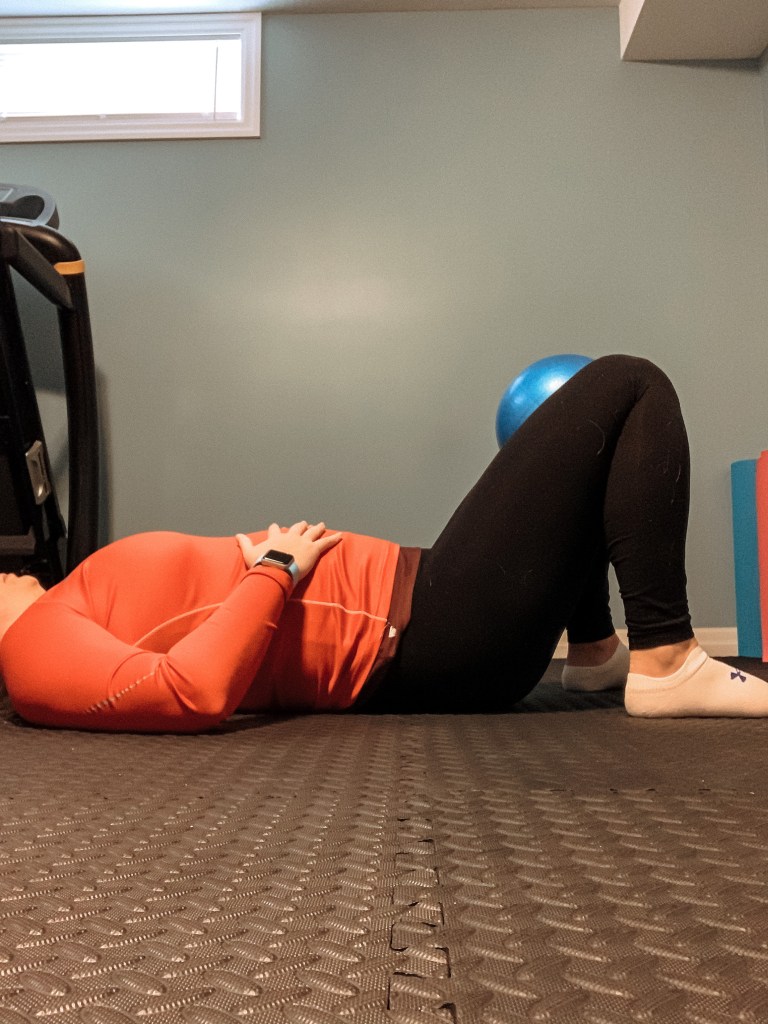
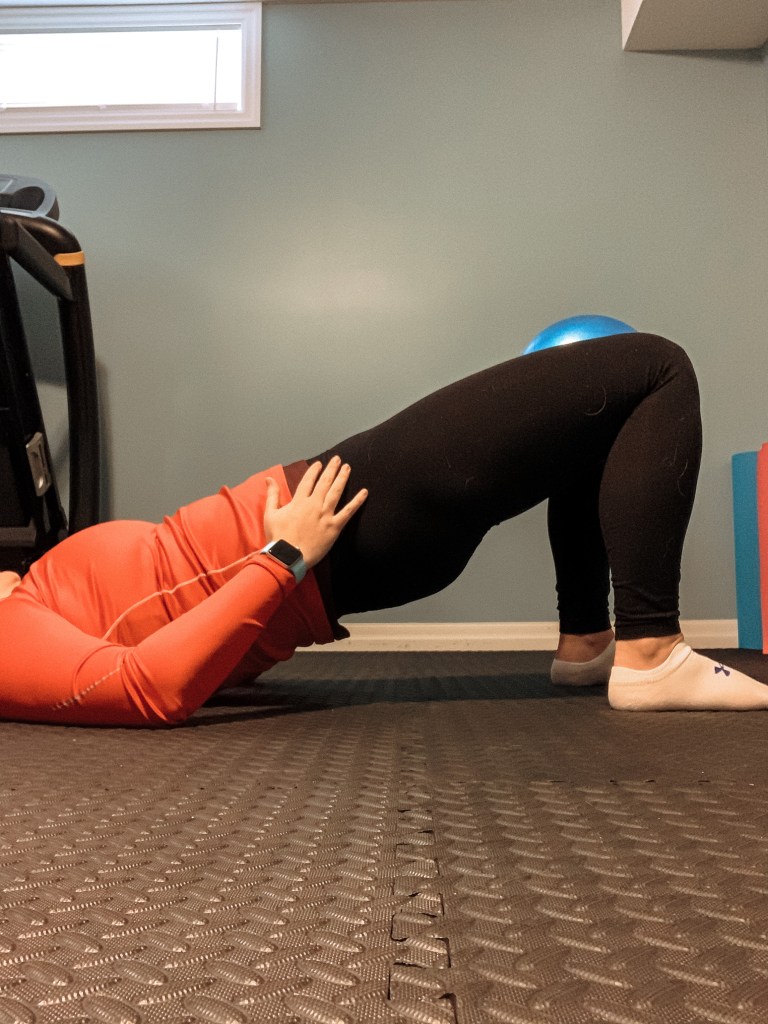
Exercise 5: Bridge with Ball Squeeze (between knees)
Begin by laying on your back with knees bent and feet flat on the floor. Place the ball between your knees. Start with a big inhale filling the rib cage, belly and lengthening the pelvic floor. Exhale as you lift your hips off the ground, squeeze the ball between your knees and lift in the pelvic floor then return to the start position. If this one is too much for you to start you can remove the bridge and just focus on the breathing pattern while squeezing the ball between your knees on the exhale.
Remember that at the end of the day seeing a pelvic health physiotherapist both during pregnancy and in the postpartum period can be helpful to help improve pelvic floor dysfuction and reconnect to your core and pelvic floor. These exercises can be a guide or a starting point for you but being able to know exactly what you need for your specific situation can be even more beneficial. If you are able to see a pelvic health physiotherapist during this time in your life take the opportunity…you defiantly won’t regret it!
 ashleepedlowcoaching.ca