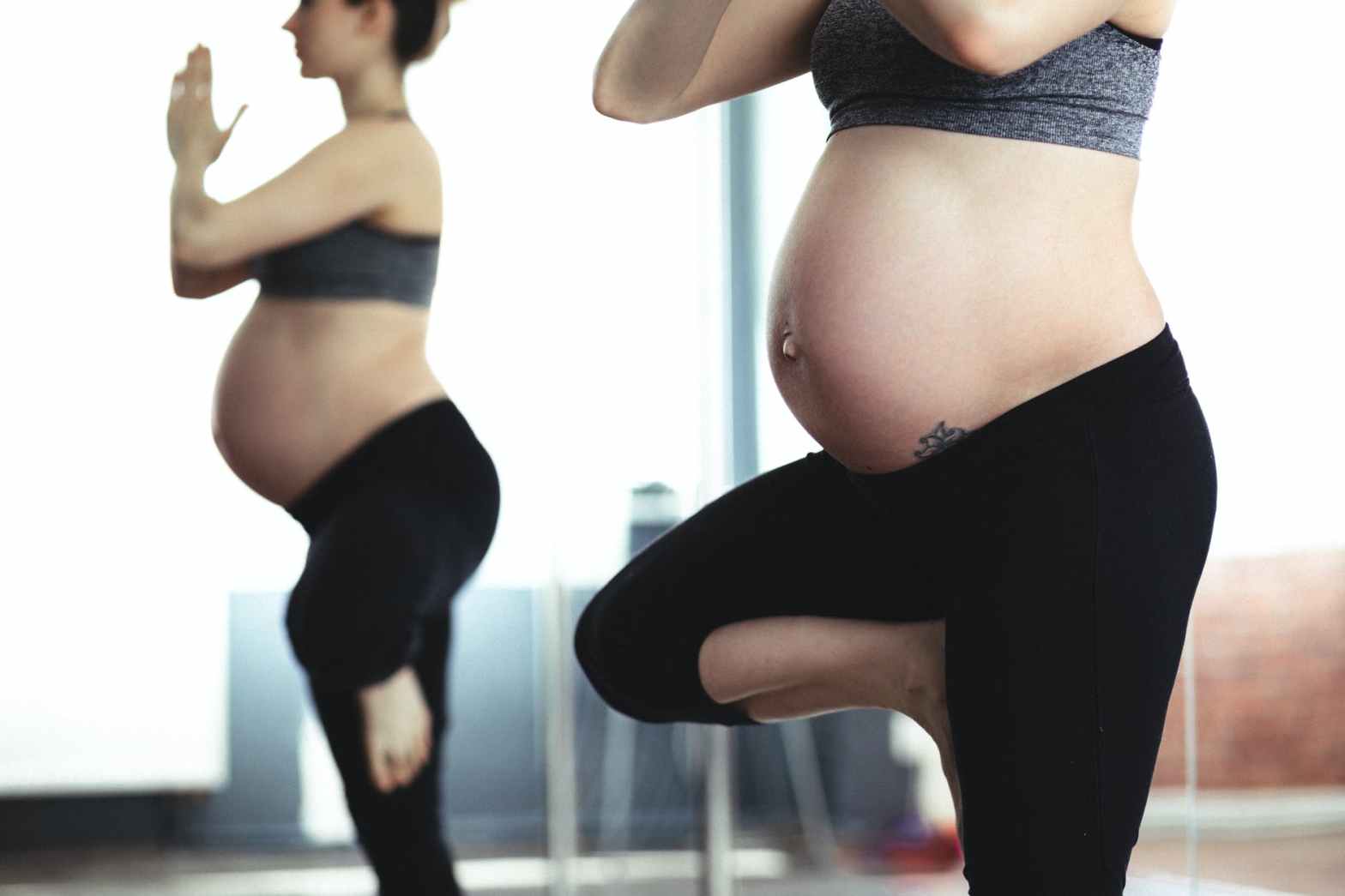
You are pregnant, now what? Last week we talked about how you can prepare yourself for pregnancy with exercise but if you are joining us and are already pregnant than today is for you.
It’s important to keep in mind that every pregnancy is different and all expecting moms will have different experiences with regards to the intensity and type of symptoms they have. This can be different at different points in your pregnancy but can also vary from one pregnancy to the next. Because of this it is important to remember to give yourself grace through this process.
While you strive to be your healthiest self during this time for both you and baby remember that your body is undergoing some dramatic changes. These changes can include increased blood volume and heart rate, fatigue, morning sickness, breast tenderness, headaches, increased urination and insomnia to name a few. If you are experiencing these symptoms then your goal of the first trimester may be just to take good care of yourself and rest when you can. If you don’t feel like moving your body much that is okay. Be sure to give yourself grace, check in with yourself and do what you can.
Like we talked about last week pregnancy, childbirth and motherhood are some of the most physically demanding events you will experience in your life and as such exercise can be beneficial at all points on your journey. Exercise and movement can act on your body’s hormone levels to help improve your mood and psychological health. Exercise may also help to alleviate some of the common pregnancy symptoms and provide you with an opportunity to engage socially with other pregnant women (birthing course, fitness classes, ect). It can help improve your ability to recover from childbirth and keep your body strong and structurally sound during pregnancy.

During your pregnancy the goal of an exercise program is similar to that of preconception. We want to aim to maintain optimal posture and alignment, maintain strength, maintain strength in the core and balance the tone of the pelvic floor, and maintain or develop an aerobic foundation all while not placing too much stress on the body. Notice the difference between these goals and the goals of preconception is that the focus is on maintaining what we currently have as opposed to trying to build muscle or strength. With that being said, it is not impossible to build muscle and strength during pregnancy especially for women who are just starting out on a fitness program, however we want to ensure that it is not the main focus of the program.
As we discussed last week (read more here) good posture and alignment is the rib cage stacked over the pelvis and the diaphragm stacked over the pelvic floor. During pregnancy, adjusting posture and alignment when exercising may help activate some muscles better which may be affected by the unusual postures. At the end of the day there is no perfect posture and during pregnancy especially, the best “posture” for your body is spending time in different postures and positions throughout the day.

It is not recommended that women set a weight loss or body fat loss goal during pregnancy. The main goal is to stay strong to hopefully allow you to have the healthiest pregnancy possible. Any body composition improvement goals should be emphasized in your preconception phase of training.
Please note that when training through pregnancy not everything may work for you and it’s important to be aware of your body and seek professional support if you have questions or are unsure of something. This is why working with a Certified Pre & Postnatal Coach can be beneficial during this time. If you are interested in getting started today please contact me and I can help guide you through the process.
You may have heard the general advice of “just keep doing what were doing before you were pregnant but don’t start anything new”. This isn’t the worst advice you could be given, but I wouldn’t say that it is entirely accurate either. If you were training before you became pregnant then you can likely can continue what you were doing before keeping in mind that it’s important to listen to your body and be aware of the signals it’s sending you. If you were not exercising before you became pregnant, then you are able to start exercising now (provided that your doctor has given you clearance to do so). This is a situation where a professional can be of help to you. The general guideline is that if you were training at a moderate to high intensity pre-pregnancy you can continue training at that intensity throughout pregnancy. If you were sedentary pre-pregnancy you should begin exercising at a low to moderate intensity.

During pregnancy we want to emphasize full body training however there are a few muscle groups that should be focused on. Your upper back, anterior core, glutes and pelvic floor are all key muscles that will be used during your pregnancy and beyond. Strengthening these muscle groups will help to support the changes your body is undergoing and will help create good movement patterns you can carry with you through the rest of your life.
Low to moderate steady state cardiovascular training is considered safe throughout pregnancy regardless of your pre-pregnancy training state. This type of cardiovascular training can help your body’s ability to deliver oxygen to the working muscles and can help you recovery between sets and between your workouts. High intensity cardiovascular training can have its place in pregnancy as well but this is on a much more individualized basis. This type of higher intensity training is considered to be safe for women who have been regularly exercising at these levels prior to pregnancy. This is due to the fact that their bodies have already adapted to these training intensities so their better able to handle the physiological demands. Keep in mind that this will likely change and will look different as you progress along through your pregnancy.

Very similarly to the preconception training recommendations it is recommended that during pregnancy women strength train 2-4 days per week and supplement with 1-2 moderate intensity cardio sessions per week. If you are including higher intensity cardio training 1-3 sessions per week is recommended based on ability level and previous training experience. Be sure to watch for signs of over training as well including more post exercise muscle soreness than usual, post exercise soreness that lasts for longer periods of time than usual, a lack of motivation to exercise, a major change in appetite (usually a decrease), a decrease in leanness despite not changing your nutrition program or exercise regimen, a decrease in strength or performance (for several workouts in a row), and/or mild depression, fatigue or irritability. During pregnancy the time of day that you train my be affected. Figure out what time of day you have the most energy and aim to train at that time of day if possible.
As you progress through your pregnancy you will want to make some changes to your exercise choices and programming at different points. During the first trimester you may have experienced symptoms that prevented you from training regularly however MOST (not all) women feel better as they enter their second trimester.
Early in the second trimester you will likely be able to do many of the same exercises however as you approach the mid to later second trimester there are some exercises we want to minimize or avoid. Minimize front loaded exercises (like front planks, pushups from the ground, mountain climbers, ect). These exercises can place a lot of stress and pressure on the anterior core and may increase the abdominal wall separation as the belly grows. These exercises can be performed from an incline during the second trimester (bench, chair or wall). You will also want to start reducing high impact exercises during the second trimester because as the baby grows there will be an increase in downward pressure on the pelvic floor. The downward pressure can be intensified if you are performing higher impact activities (jumping) and may increase your risk of pelvic floor dysfunction. Many women are okay to still be lying on their back at this point, however if you experience any dizziness, lightheadedness, nausea, tingling in the legs or general discomfort aim to avoid lying directly on your back. An incline can also be appropriate here as well.

During the third trimester aim to maintain a comfortable level of exercise and strive to reduce any discomfort related to the physical changes that are happening in your body. You can being incorporating birth prep exercises into your workouts and aim to maintain as much strength and muscle mass as your body will allow. You may start to notice that certain exercises start to feel difficult or awkward during your third trimester and this is completely normal. You can sub these exercises out for alternatives that feel better for you. You are also at a greater risk of overheating during your third trimester so aim to take more rest time between sets and decrease the intensity of exercises to help keep your body temperature in check. If you have been performing high intensity exercise up until this point, now would likely be the time to remove it. You will likely feel more fatigue during this trimester and your energy should be focused toward strength training and birth prep exercises. We also want to minimize the downward pressure placed on the pelvic floor as much as possible at this point in pregnancy. You may find you need to increase rest time between workouts and that is okay. You’re carrying around more weight at this point and even your day to day activities will require a lot of energy. Aim to rest as much as possible as well during this time. Your body will tell you what it needs so tune in and listen to it.
During and after your pregnancy your body will be strong, fit and beautiful, but it will be different. Let yourself become a mom and know that you will always be you, no matter the changes. If you are looking for coaching advice, please contact me for a free consultation. I am offering virtual services at this point and can offer flexible pricing options to meet your needs.
 ashleepedlowcoaching.ca